
LILY RESLINK
Staff Writer
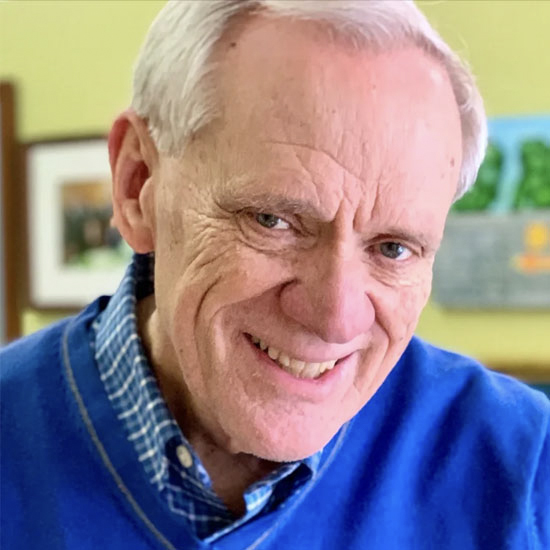
Wes Granberg-Michaelson, who has led an active life in political and ecumenical work, is interested in how religion can offer a functional role in its application to peaceful and inclusive communities and institutions.
He will deliver a lecture at 2 p.m. today in the Hall of Philosophy about his reflections on how practices of one’s inward spiritual journey relate to one’s outward action — something Granberg-Michaelson said he has spent a lot of time trying to figure out.
“That’s probably been the most important theme in what I’ve tried to contribute,” he said.
Granberg-Michaelson explained that his perspective draws on his practical background in policymaking.
From 1994 to 2011, Granberg-Michaelson served as general secretary of the Reformed Church in America. He currently works as an author, contributing editor to Sojourners magazine and board member for both the Global Christian Forum and Church Innovations.
In his lecture, Granberg-Michaelson said he speaks from a Christian tradition, but said he has longtime experience engaging with interfaith issues. “Many of the things I say, I try to relate to other religious traditions as well,” he said.
Granberg-Michaelson said his lecture will explore four questions related to Week Seven’s Interfaith Lecture Series theme: “Religion, Power and the Moral Stakes of a Changing Global Order.”
The first is “What’s the indispensable contribution which religion can make to a moral foundation for a changing global order?” which he joked is “just a small, minor matter.”
The second, he said, is “Where and how has religion impacted this contemporary evolution of global politics, both positively and negatively?”
The third is “What future places, which now may be off the public radar, might we look to for the impact of religion on global developments?” Fourth and finally, he will address, “What practices should religious communities cultivate to nurture the contribution which they can make to the moral foundations of a changing global order?”
Granberg-Michaelson’s perspective blends an emphasis on a committed local community with national policy and global order.
“I actually spent 10 years watching and being pretty involved in the process of policy making, particularly during the Vietnam War … and also around nuclear disarmament.” From 1968 to 1976, he said he worked in the U.S. Senate for former Sen. Mark Hatfield.
He also worked with the World Council of Churches, which he said consisted of traveling to international conferences and witnessing how the church is trying to grapple with global issues in different places around the world. Granberg-Michaelson said this position included aiding churches in accompanying the climate change movement early in its development around 1990.
“When I began at the World Council, they asked me to address the issues around what they called ‘integrity of creation.’ It was when environmental issues were just beginning to come onto the stage of religious communities,” he said.
To guide thought around global politics and global order, he named what he thinks are “three compelling convictions that should be a part of the foundations that religion can bring.”
Number one, he said, is designating peacemaking as the center point of all engagement. He said this means prioritizing peace over national self-interest and power.
The second role of religion, he said, is its ability to undermine nationalistic ideologies amid the “rising problem” of authoritarian nationalism being accentuated around the world.
His third point relates to religion’s reinforcement of the intrinsic human value of human life.
“Any religious contribution should start by affirming the intrinsic value of every human life, and as that is the moral reference for judging international actions,” he said.
Granberg-Michaelson said his most recent book, The Soulwork of Justice: Four Movements of Contemplative Action, is devoted to transferring inward spirituality to external impact.
Off the beaten path of his professional biography, he said other formative experiences for him include weeks living in a Trappist monastery.
“I was trying to figure out in the midst of a really busy, active life in politics and in ecumenical work, how do you nurture resources inwardly?” he said.
Granberg-Michaelson is now in what he called “an interesting final chapter in a strange career.” He and his wife, Kaarin Granberg-Michaelson, who are both ordained, have been local pastors for the Evangelical Lutheran Church in America in Santa Fe, New Mexico. He said the small Lutheran church came to them needing help, and they have pastored there for almost two years.
He noted this is his first visit to Chautauqua Institution.
“I assume many people who come to Chautauqua are in a state of high anxiety about where our nation is and where our world is, and what can they do, and what kind of activism should they engage in,” he said. In answering the first of the four questions, he said his call to action is “not saying ‘What do we do?,’ but ‘Who are we called to be?’ and ‘How do we nurture the kinds of inner resources that are going to be necessary for the long haul?’”