Deborah Trefts
Staff Writer
This week, Chautauqua Women’s Club is sponsoring presentations on women’s history, health and impactful collaboration to supplement Chautauqua Institution’s 2026 Chautauqua Lecture Series theme — “Icons and Instigators: Women Who Change the World.”
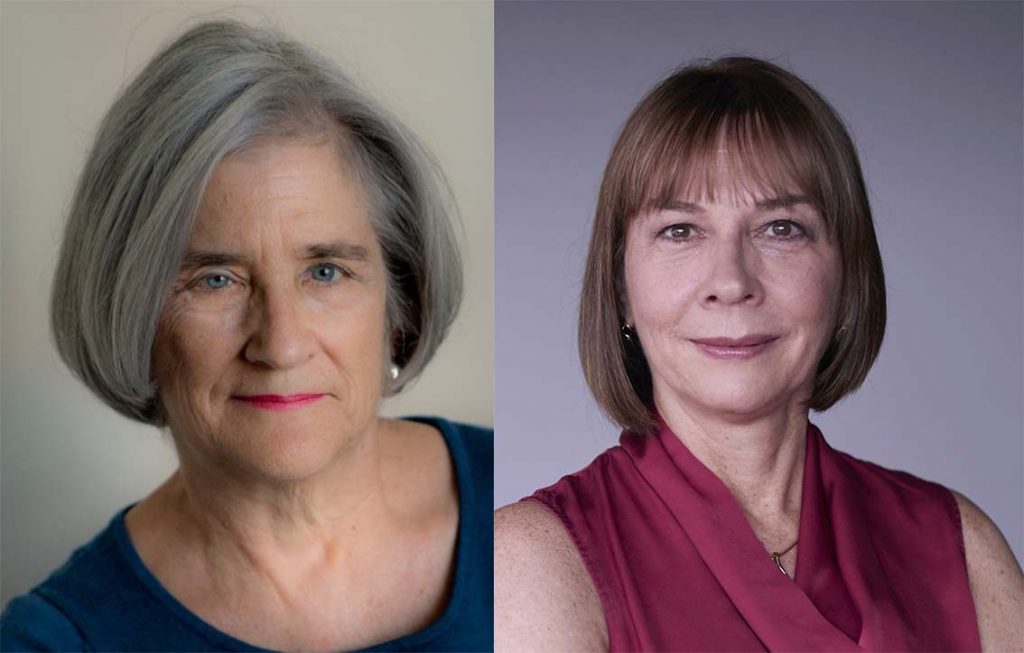
Sara Fitzgerald, a retired journalist and award-winning author of both fiction and nonfiction, will kick programming off at 9:15 a.m. Tuesday at the CWC House. Her presentation, titled “Discovering the Unsung Heroines,” will also launch the 2026 Chautauqua Speaks lecture series led by CWC’s program chair, Norma Ingram.
Halina M. Zyczynski, MD, director of the Erie, Pennsylvania, campus of the Magee Women’s Research Institute, will follow at 4 p.m. Wednesday at the CWC House with a special program organized by CWC President Kelly Ann Boyce in partnership with MWRI — “The Conversations We Wish We’d Had Sooner: Women’s Health and the Microbiome.”
Fitzgerald on Tuesday: Unsung Heroines
Fitzgerald has had her works published since she was a child; in Michigan during the 1960s, poems and stories she contributed appeared on the Wide Awake Club page of The Flint Journal.
While majoring in history and journalism at the University of Michigan, Fitzgerald took a course with Katherine Kish Sklar, an assistant professor of history. At the time, Sklar was early into her distinguished academic and writing career focusing on women’s involvement in social movements, volunteer organizations and U.S. public culture.
One Sklar course assignment directed Fitzgerald to interview women in her family. Because her grandmother had had a stroke, she spoke with her aunt, who was older than her mother. This experience sparked her keen curiosity about “little-known women” and “pioneers of women’s history.”
While writing her senior thesis on the post-WWI flapper subculture and phenomenon, Fitzgerald served as the first woman editor-in-chief of the university’s campus newspaper, The Michigan Daily.
Leaving Ann Arbor to intern for The Akron Beacon-Journal and The Miami Herald, Fitzgerald soon landed her first full-time professional journalism position at The St. Petersburg Times on Florida’s west coast. After marrying and moving to Washington, D.C., she was hired by National Journal magazine, which she said “was a great way to learn about government.”
Fitzgerald began her 15-year tenure at The Washington Post in 1979, becoming the first editor of its electronic edition, which launched in 1980. Focusing on interactive media during her last years at the Post, she then decided to work for an industry trade association, and thereafter to cofound a consulting company, Funds for Learning.
“In 1996 the Telecommunications Act passed,” Fitzgerald said. “It created the E-rate program to get schools and libraries on the internet. I was helping the people involved understand the internet and build out their networks and the FCC (Federal Communications Commission) was issuing rules.”
All along, however, the lives and work of little-known and pioneering women continued to intrigue Fitzgerald, who has shared their stories in books that have won honors and awards.
Among the topics she’ll cover in her CWC presentation are national politics, a surprising transatlantic romance and pervasive discrimination against women at coed universities. More specifically: “the top woman in the Republican Party of the 1960s, the secret American love of the poet T. S. Eliot” (Emily Hale) “and the women who challenged sex discrimination at American universities in the 1970s,” paving the way for Title IX.
Fitzgerald said that she will also highlight little-known women whom other biographers are currently discovering, and identify key challenges they’ve been confronting while doing so. Her success has earned her a seat on the board of the Biographers International Organization and the United Church of Christ’s Media Justice Ministry.
At Chautauqua this week, Fitzgerald will also be teaching two Special Studies classes — one on literature, “Capturing Lives: Fiction Vs. Nonfiction,” and the other on writing, “So You Want to Get Published.”
Zyczynski on Wednesday: Women and the Microbiome
The collection of microorganisms living in or on the human body — the microbiome — is not just an emerging area of medical research; it’s a hot field of medicine.
For instance, menopause brings changes in urinary and pelvic health that make women more vulnerable to disruptions that they should be aware of.
Enter Zyczynski, professor of obstetrics and gynecology at the University of Pittsburgh and a practicing urogynecologist at the University of Pittsburgh Medical Center Women’s Center for Bladder and Pelvic Health. In addition to OB-GYN, she is certified in female pelvic medicine and reconstructive surgery.
Born and raised in New York City, Zyczynski studied medicine at Albany Medical College before moving to Pittsburgh, Pennsylvania, for her residency.
“I came to Pittsburgh after medical school, married there and raised three children,” she said.
A “passionate advocate for extending access to research to women living in low resource and rural communities,” Zyczynski has served as the medical director of MWRI’s Erie campus since its establishment in 2020. She is also affiliated with UPMC-Hamot and UPMC Passavant and divides her time between the office and operating room.
Zyczynski’s CWC lecture is “one of many steps to narrow” the “phenomenal knowledge gap” uncovered through a survey undertaken by UPMC and Pennsylvania State University at Erie, The Behrend College, to determine where people have been getting information from about the bladder.
“Less than 10% of women knew about the vagina and urinary tract,” she said. “Everyone has bacteria in their bladder at all times. It doesn’t mean it’s pathogenic or harmful. It’s very likely beneficial.”
Numerous National Institutes of Health-sponsored “clinical trials of traditional and emerging treatments for pelvic floor disorders in women” have benefited from her contributions as a clinical scientist. In addition, she has written more than 130 peer-reviewed publications providing patients and physicians with “guidance for shared decision-making” and information about “risks, benefits and treatment outcomes.”
Zyczynski has also held several national positions of note, including as president of the American Urogynecologic Society, a member of the executive board of the American College of Obstetrics and Gynecology and an examiner for the American Board of Obstetrics and Gynecology.
“Years ago we didn’t know all these microbiomes were working for us — like ballet and choreography, there’s a synchronous balance that is crucial for our health,” Zyczynski said. “Yet the choices we make and the marketing we’re exposed to are not good. … When you aim to curb bad bacteria, you do so to good bacteria. I use a holistic approach.”