DEBORAH TREFTS
Staff Writer
The Columbus Boychoir — “America’s Singing Boys” — and Chautauqua Institution share a unique history that some longtime Chautauquans may fondly recall.
Founded in 1937 in Columbus, Ohio, as both a choir and boarding/day middle school by choral conductor Herbert Brown Huffman, a member of Westminster Choir College’s very first graduating class, the choir rapidly gained prominence.
Huffman believed “the experience of performing the great choral literature — and performing it at the highest professional levels — could have a profound effect on the academic, social and moral development of boys.”
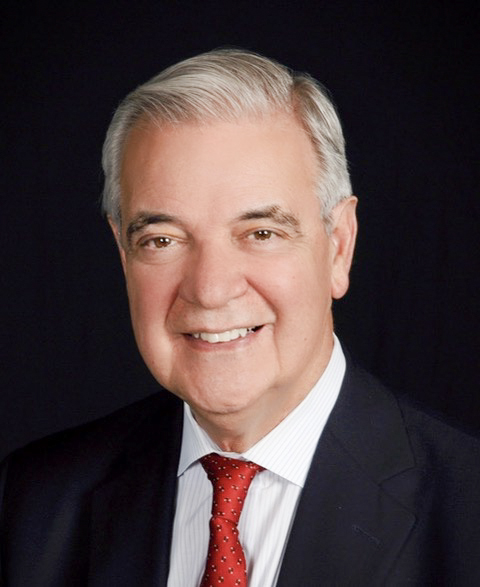
Dr. G. James Sammarco, a standout Boychoir member whose late uncle, Mario Sammarco, sung at the historic La Scala opera house in Milan, Italy, will give a talk at 9:15 a.m. Tuesday at the CWC House titled, “A Boy’s Story: Columbus Boychoir.”
In 1950, just before Sammarco was selected to be part of the choir, the Columbus Boychoir moved into Albemarle — the former estate of Gerald Lambert, the pharmaceutical magnate who developed Listerine — in Princeton, New Jersey.
“I grew up in Hackensack, New Jersey, and came (to Chautauqua Institution) in the early 1940s with my mother and family,” Sammarco said. “Early on I went to the Children’s School, and then to Boys’ Club for three years.”
According to Sammarco, the Chautauqua Movement fostered a need for culture in towns and small cities, which the traveling Columbus Boychoir helped meet. Featured on radio and television, as well as in theaters, the choir made numerous recordings with opera and vocal professionals.
“The Boychoir came (to Chautauqua) for four weeks every summer,“ he said. “(They) rehearsed for national tours and two Amphitheater performances. That’s where they introduced to the kids (in the choir) the concert tour for the fall, October and November, and for the spring, March and April, when there were an average of three to five concerts a week.”
In November 1950, the Boychoir was on tour in Dumont, New Jersey. “My mother asked if I wanted to go and I said, ‘Sure,’” Sammarco said. “And afterwards, she asked if I wanted to audition, and I said, ‘Sure.’ Then I was accepted to the Columbus Boychoir, the most exciting part of my childhood. I was 10 years old when I entered the Columbus Boychoir School in January 1951. It was wild.”
Soon after, the Italian librettist, director and playwright Gian Carlo Menotti — who also composed 25 operas — came to Albemarle, held an audition and chose novice Sammarco and two older, trained, choirboys to perform in the world premiere of his opera, Amahl and the Night Visitors.
“I entered the fast lane,” Sammarco said. “… I was put into the touring choir. … I was a soprano and I soloed. … I was having the time of my life. … Amahl became the opera for about 10 years. ”
The rest of Sammarco’s Columbus Boychoir adventure is his to share in person on Tuesday morning.
“I did that for four years,” he said. “… The arts are competitive, I was taller and my voice was changing at 15, so I left. … I went home, enrolled in high school and did some regional stuff, including Gilbert and Sullivan.”
At Dartmouth College in Hanover, New Hampshire, Sammarco joined the Glee Club, which performed in shows at Radio City Music Hall seven days a week during the summer. “You did your part, walked around New York City for two hours, then came back and did another show,” he said.
Despite not having applied to Tulane University School of Medicine, Sammarco’s uncle Charlie, who was a surgeon and professor there, “called and told (him) that he’d been accepted,” so he decided to earn an M.D. at Tulane. Since he’d been in the officer corps, he then went into military service.
Afterwards, having been assured that there was a position waiting for him at Case Western Reserve University, Sammarco said that he and his first wife drove to Cleveland, Ohio, with their two young children in the back seat. With so many Vietnam veterans returning, however, there was no place for him
“Victor Frankel, a Ph.D./M.D. orthopaedic surgeon, said, ‘Come with me,’” Sammarco said. “NASA was doing research on putting people on the moon. When an astronaut is in space for two weeks, he can’t get out of the chair. (Frankel) said, ‘We don’t know what the range of motion of the leg is.’ They’d already done the hip and the knee. He asked me to do the kinematics of the ankle — the range of motion. The reason I could do that was because I’d had two years of surgery in the service.”
Sammarco said he chose the Biomedical Lab in the Department of Orthopaedics and remained at Case for four years. Then he “went into a town/gown practice at the University of Cincinnati” so he could be in private practice and teach.
“My hobby was ballet medicine,” Sammarco said. “And I was one of the physicians for the U.S. alpine ski team for four years. In the off years of the Olympics, they’re involved in the Cup du Monde [World Cup]. I traveled with them. That was fun.”