
LILY RESLINK
Staff Writer
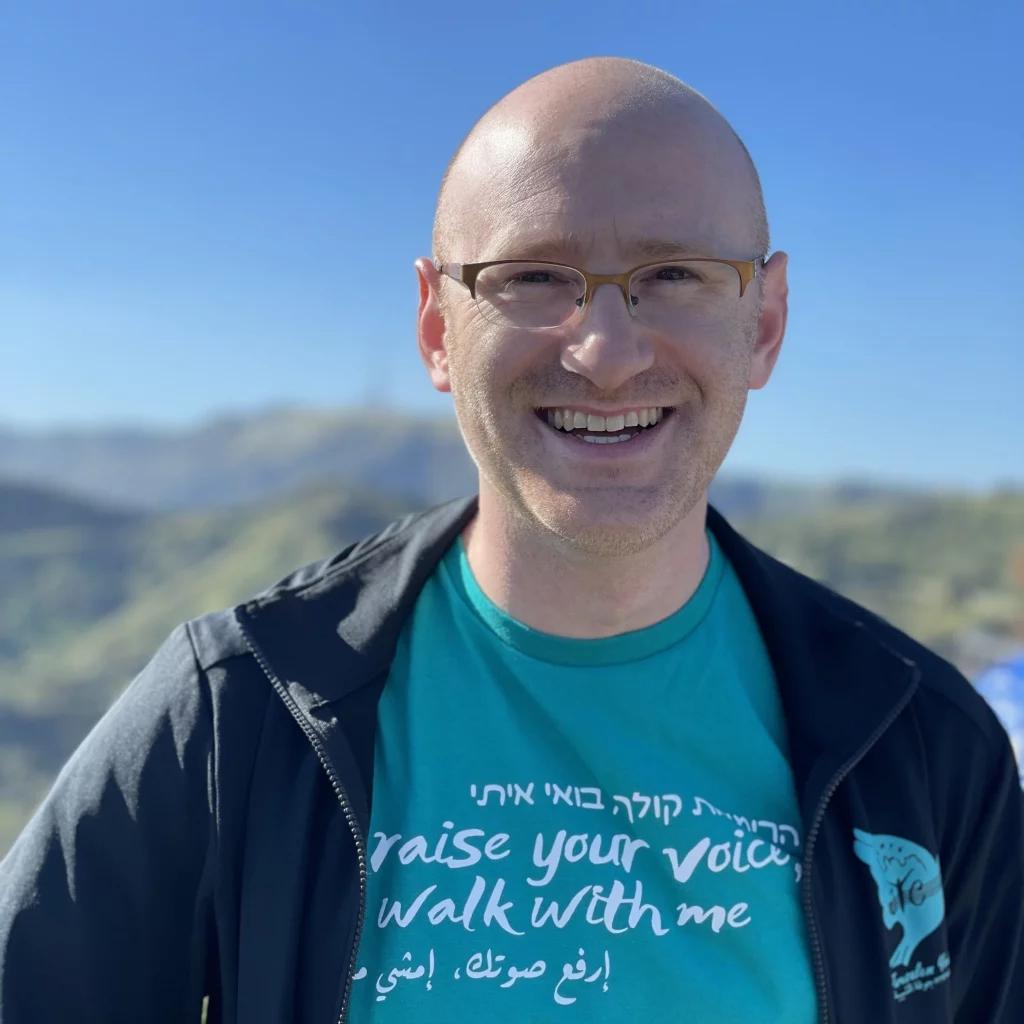
Rather than a spoken-word lecture, Michael Hendler, founder and artistic director of the Jerusalem Youth Chorus, is more interested in the impact of words that people sing together. At 2 p.m. today in the Hall of Philosophy, Hendler will sing with the audience.
Hendler will lead the community in a program titled “Songs to Carry Us Through.” He said the “community sing” will consist of “a roomful of people making music together, led entirely by voice, with nothing to prepare and nothing to prove.”
Hendler said his afternoon appearance will be a continuation of ideas about music and dialogue from his Chautauqua Lecture Series appearance at 10:45 a.m. today in the Amphitheater; in his afternoon lecture, he will join the audience together by practicing music as a group.
“For an hour, we’ll learn songs by ear — no sheet music, no experience needed — drawn from traditions of struggle, faith and hope from around the world,” he said.
According to Hendler, the communal nature of singing can lend itself to a powerful shared experience.
“There’s something beautiful and powerful that we can unlock — whether we’re good at it or not — by just participating in the process, in the practice of singing with other people,” he said.
According to Hendler, anyone who can hum can participate — and participate they will.
“If someone’s just coming to hear a lecture, they might feel surprised when [they are asked] to sing the alto part,” Hendler said.
Hendler said those who feel they “can’t sing” are exactly who he feels belong at the event. He will lead the audience in songs meant to comfort people through hard times, which he said enables participants to “experience firsthand” the meaning of Week Five’s theme: “The Creative Spirit: Art, Resilience and the Soulful Work of Making Art.”Having founded the JYC in 2012, Hendler’s career is centered around the mission of peace and Israeli-Palestinian dialogue. He said music joined with dialogue achieves progress in alleviating conflict that one can not achieve without the other.
“Hopefully people leave feeling uplifted, grounded and maybe a little proud of themselves — particularly if they thought they weren’t singers but came anyway,” Hendler said.
In reference to the contrast between people that sing professionally and those who prefer to be in the audience, Hendler said he believes “singing is just a part of being human.” He argued that equal participation in song, regardless of one’s perceived skill level, has a unifying and humanizing effect for a group.
He said he hopes people leave feeling more empowered to use their voices in their own communities — musically and otherwise. “The kind of thing that we’re doing with a community sing is not — unfortunately — super standard in the U.S. these days,” Hendler said, but the events have a profound impact in addressing multiple forms of division and injustices.
To participants, Hendler said, “Come as you are. Bring your voice, whatever you think it sounds like, and an openness to the person next to you. That’s all you need.”