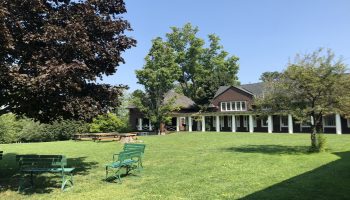
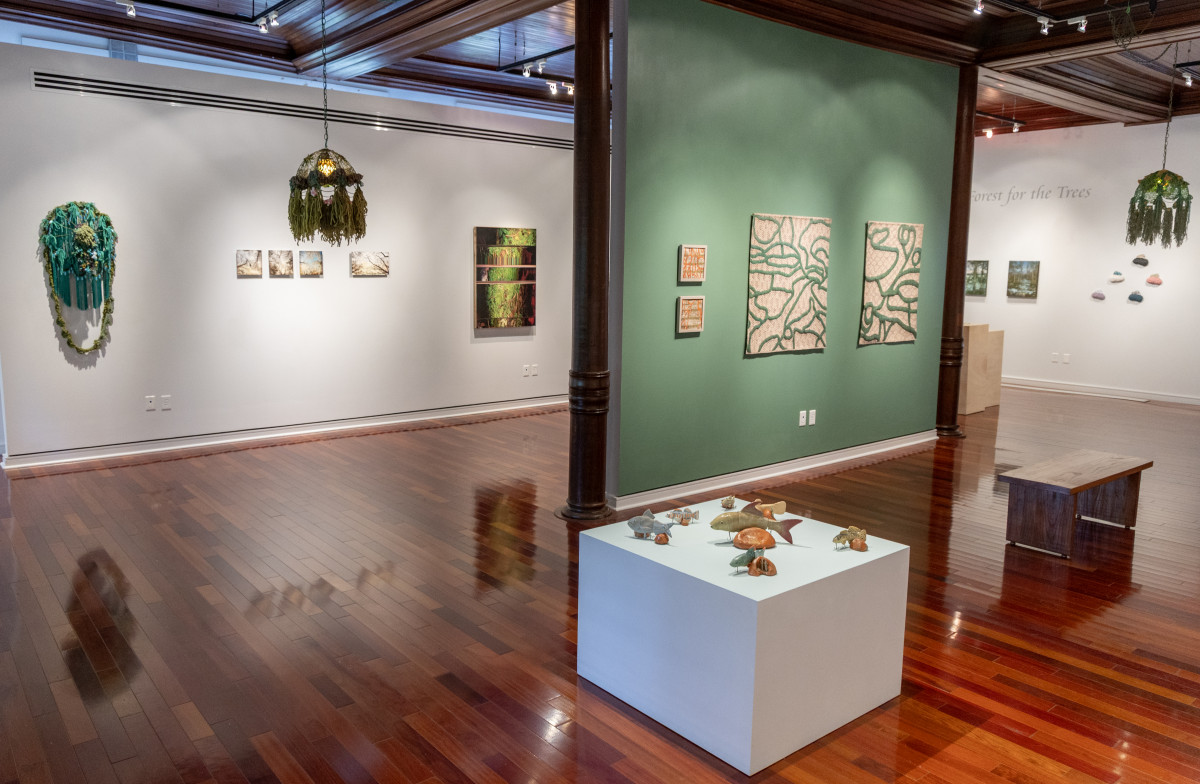
 Pieces are displayed in “Forest for the Trees” in Fowler-Kellogg Art Center. The exhibition runs through Aug. 9. SAM HUFFMAN/STAFF PHOTOGRAPHER
Jenell Taylor
Staff Writer
Growing up, multidisciplinary artist Addyson Aftanas witnessed the devastating impacts of river pollution and habitat degradation on her home’s ecosystem in rural Appalachia. Having spent much of her childhood around the waterways, she developed a deep connection to the environment, creating a life of work that honors all of its creatures.
“We call this place home — we call Earth home, but continue to degrade and destroy it,” she said. “I think that’s kind of at the root of the work,” she continued.
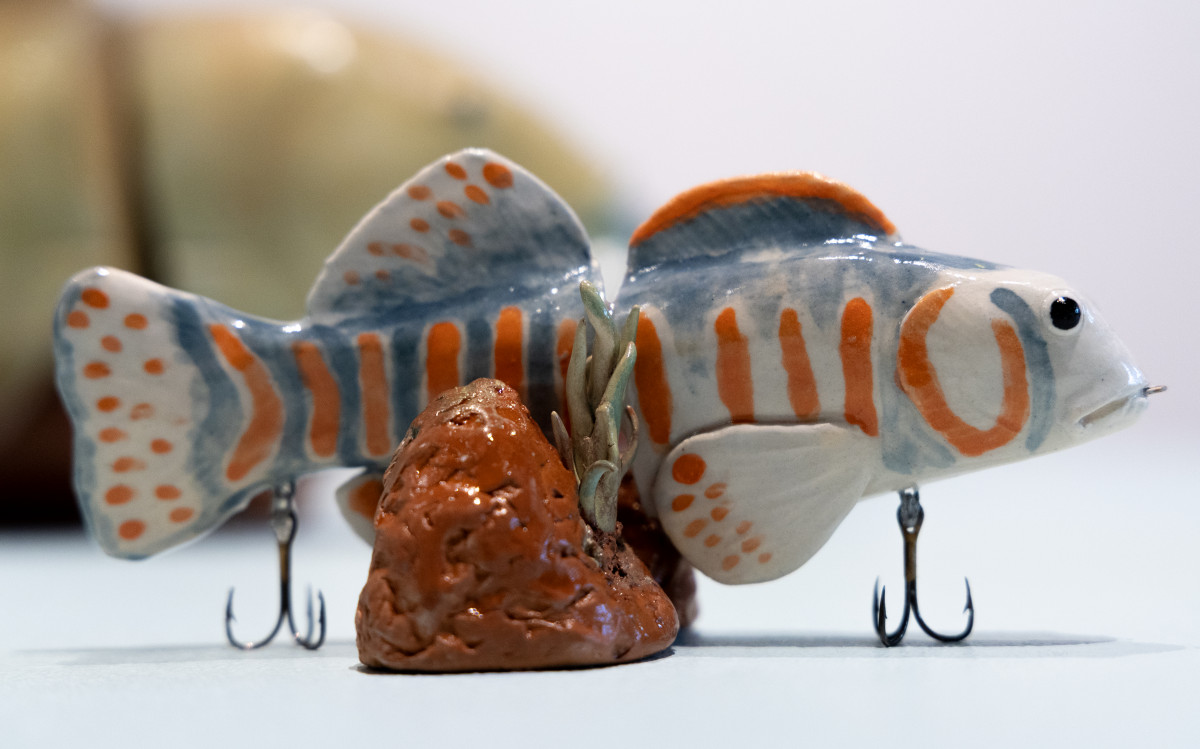
Aftanas uses clay, wood, fur and bone to create mixed media sculptures that tell the stories of animals without a voice. She began her first semester of college as an environmental science major, where she explored the ways humans have impacted the planet, then began working with clay. “Clay physically holds memory, and will try to go back to the shape that it originally was,” she said.
This feature of the material speaks to her process of memorializing the natural world. “The ‘Appalachian Reliquaries’ — the piece in the exhibit — calls attention to the issue and simultaneously exposes people to kinds of fish they probably did not know existed.”
The exhibition, titled “Forest for the Trees,” is focused on the positive impact of forest ecosystems and how humans can preserve them. Curated by Erika Diamond, associate director of Chautauqua Visual Arts Galleries, “Forest for the Trees” displays work by Aftanas, Tali Weinberg, Melissa Webb, Colby Caldwell, Joan Elliott, Colleen Toledano and Anna Johnson. It is open through Aug. 9 in the First Floor and Angela Fowler Memorial Galleries of Fowler-Kellogg Art Center.
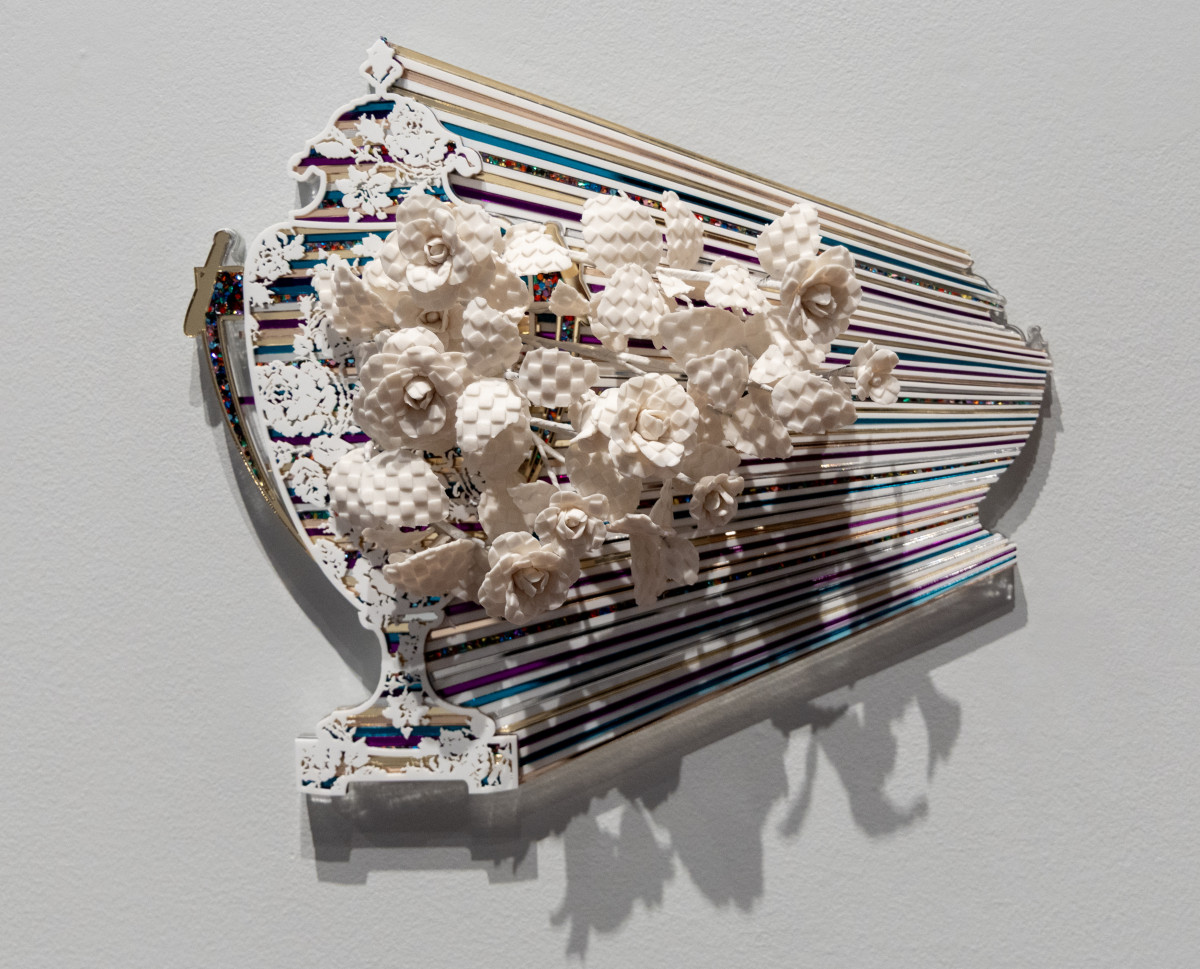
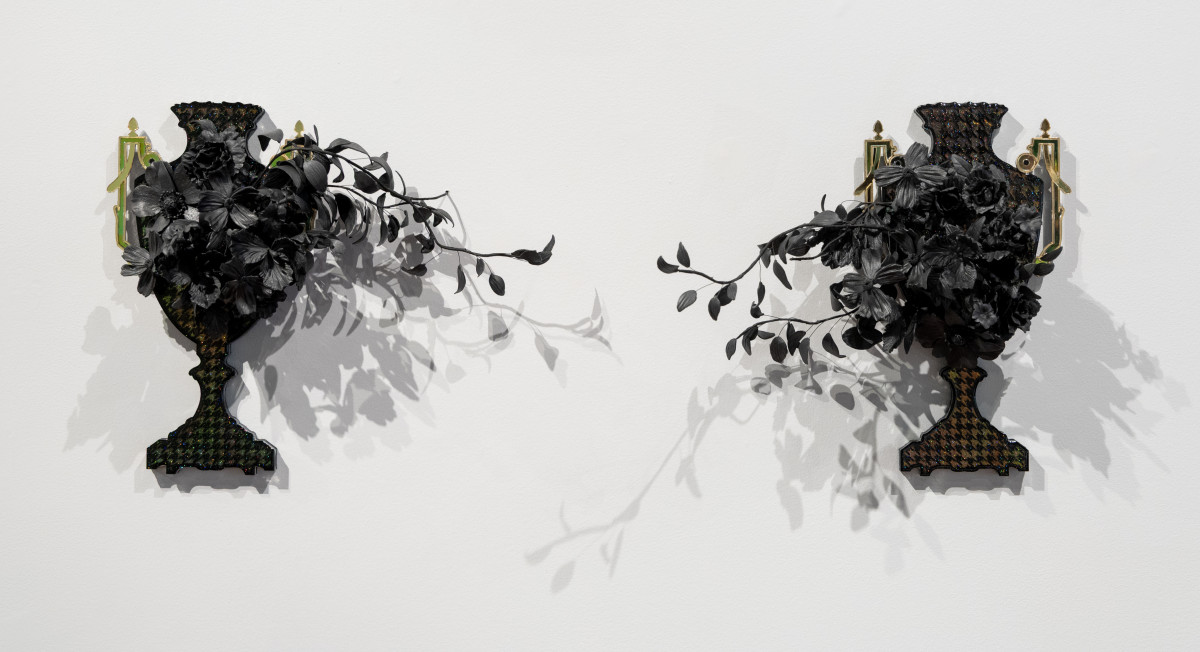
Also working within the ceramic discipline, Toledano explores the intimate relationships between nature and self by asking the question of how the natural world interacts with her inner perspective. According to her artist statement, her work takes inspiration from Wedgwood pottery and Sèvres porcelain to represent “protection, nourishment and transportation.”
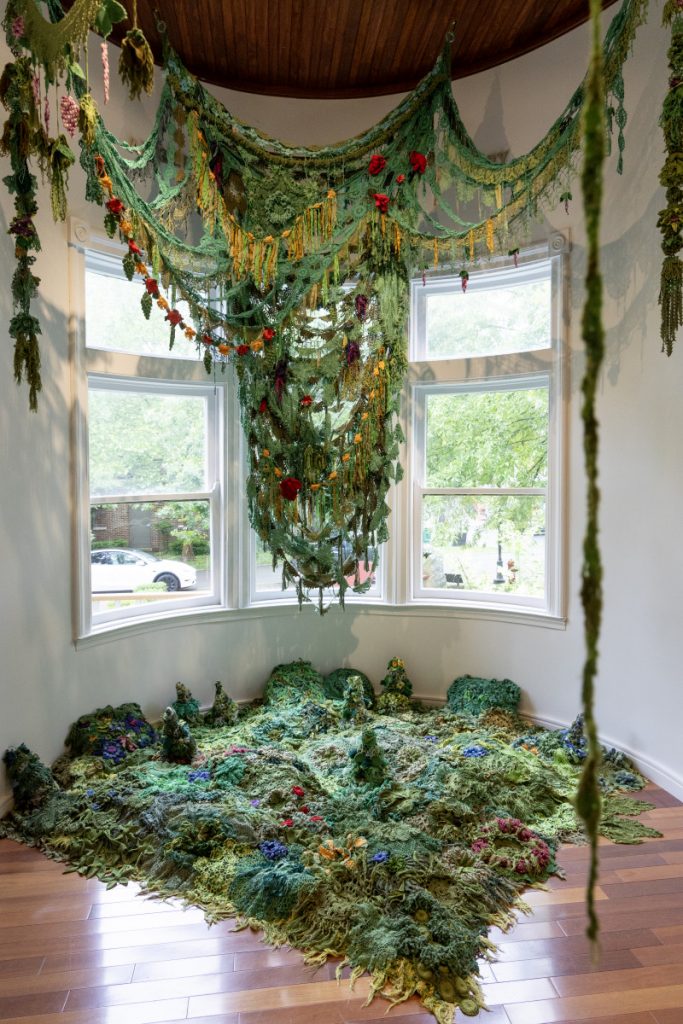
Concerned with the disconnect between humanity and the natural world, Webb uses handmade found and reconstructed textiles to create her pieces. Her contribution to the exhibition is a life-size fiber installation of a living room where everything in it is reminiscent of natural forms. “This is me trying to get my head around the conditions of humanity,” she said.
She explores the space that exists between human beings and nature, commenting on how removed mankind is from the living being that is Earth. “People decorate their homes with iconography of nature — kind of aggressively,” Webb said. “Everything’s got a lot of floral prints, doilies and things that look like plants. It’s nature on their own terms,” she continued. “And meanwhile, they might be poisoning animals in their backyard, you know?”
Webb said she feels the display of nature within homes is unnatural when it directly creates real-world damage.
“Cutting back hedges and making sure everything is perfectly manicured — kind of idealizes nature at the same time.”
Interdisciplinary artist Weinberg focuses on humanity’s connection to nature on a physiological level. She uses plant fibers to weave massive tree silhouettes whose roots reflect aspects of the human body, such as the lungs and brain.
“I weave monofilament and cotton into silhouettes of tree species threatened by climate crisis, suspending ghostly, semi-transparent forms upside-down to evoke lungs, arteries and roots,” she explained in her artist statement.
In comparison to Aftanas’ clay depictions of Appalachian imagery, North Carolinian artist Caldwell uses photography to speak to the trees. Having grown up with his grandfather, Caldwell would spend the wee hours of the morning on the water fly fishing and learning about the world.
“He showed me the world and its beauty and toughness,” he said. “The kind of horrific elements of how the natural world takes care of itself.”
Caldwell said the works on view in the exhibition are born out of a series started during the COVID-19 pandemic. He said he felt at the time that the forest and woods were among some of the safest places to be.
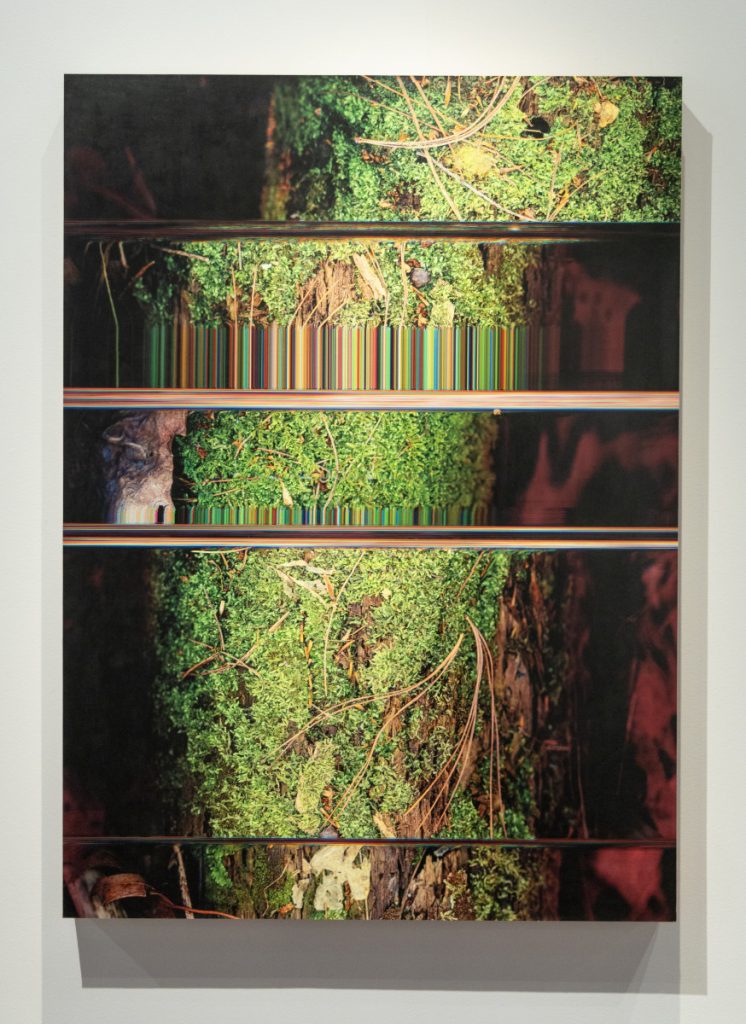
“It felt like a metaphor to be thinking deeply about climate change and how that was affecting the world,” Caldwell said.
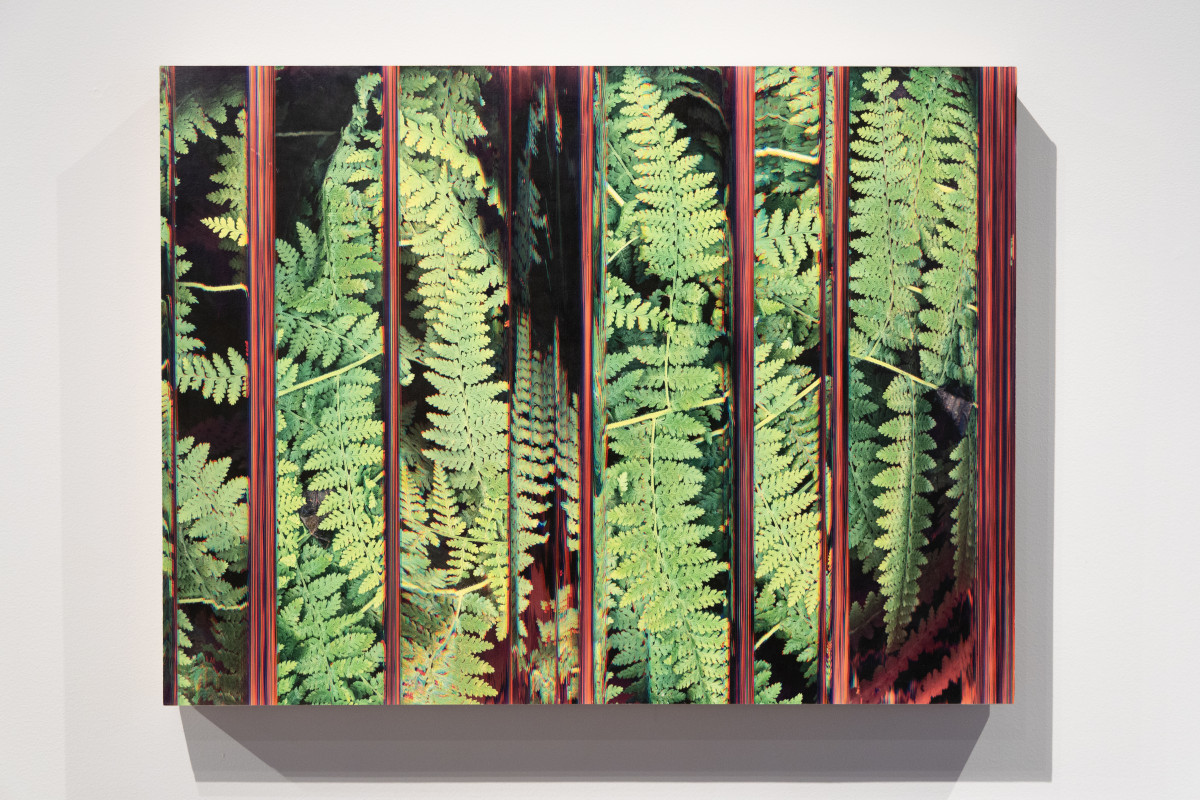
Caldwell’s photos use direct scans and large format digital printers to discover how technology and nature interact. Using a single exposure of his digital scanner, Caldwell has just 12 minutes to circle a tree or patch of greenery to capture an image that he can use to create “natural and digital conversations with still life being the subject matter.”
“I’m really interested in the methods in which you interface with the environment and the conversations you have,” he said. “And how that choice of tools and methods of working leave an imprint on how it’s received by people.”
Similarly, landscape painter Elliott shares a process-forward approach to her work. With paintings that typically take between three months to a year to complete, she pays close attention to how she feels internally as she works, not entirely concerned with the outcome.
Using oil paints to reimagine the environment in front of her, she dives into the healing elements of forest imagery. She begins with a simple image then layers the paints to create an ever-changing forest landscape.
“I start off with a nice prepared surface, and I work on birch panels that I stretch the canvas over, because I really like the cushioning of canvas,” she said. “Then I’ll start working with a wet-toned ground, kind of working with a beginning composition and going from there.”
Elliott’s connection to nature is one that morphs and changes as she grows in her practice. The reflection of the world through her eyes is a message about how the Earth returns to itself despite what is piled on top of it.
“I’m hoping that people stop long enough to really look at it,” she said. “The works are as much about the paint as they are the image. So it’s like this whole experience that I hope will be kind of meditative or contemplative.”
“Forest for the Trees” also features original work by Johnson, an experimental musician and visual artist. With a background immersed in Celtic and Anglo-folk traditions, she is curious about the ritualistic ways that humans interact with the world, and subsequently, how the world responds back to us.
According to her artist statement, Johnson’s shows are “augmented by her original projection designs,” and she is “drawn to the meeting points between personal and mythical, present and ancient.”
“Forest for the Trees” combines the works of these artists to remind Chautauquans of the planet’s beauty but also its ailments. Through conscious reflection on how humanity’s history is interconnected with the Earth’s, people can continue the fight to keep its ecosystems safe.