JENNA OUTCALT
Staff Writer
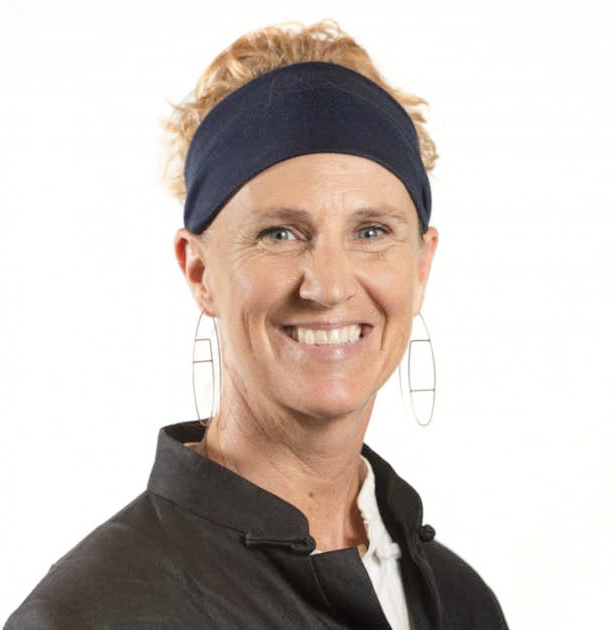
When Chautauqua Symphony Orchestra bassist Caitlyn Kamminga was designing her capstone project for her executive certificate in global leadership, she had to consider what the greatest issue of her time is.
“For me, there’s only one answer, and it’s climate change because it intersects with everything,” she said. “It intersects with education, with gender, with race, with poverty, with health.”
Kamminga will premiere “The Age of the Imaginals,” a chamber music performance that mixes in spoken word poetry by Kamminga at 12:45 p.m. today in Smith Wilkes Hall in partnership with the Chautauqua Climate Change Initiative. Her colleague, Adam Walters, composed the music and will attend the performance.
The piece uses the metamorphosis of caterpillars to represent the way humans will have to unite to change the course of the planet, Kamminga explained. Including a cast of metaphorical characters like “the fat cat” and “Mama Mariposa” and referencing Trinidadian lore, the metaphor centers on the tiny cells called imaginals that start to reverberate when a caterpillar transforms into a butterfly.
“They’re all humming separately, and it’s not until they figure out that they have to hum together that something happens,” Kamminga said.
Kamminga compared this to the idea of one person using one vote versus 10,000 people using 10,000 votes to make a difference. She said the piece can help people “think imaginatively about how to adapt” to a changing world.
Kamminga teaches at the University of Trinidad and Tobago, where she has designed a course called “Creative Climate Communication.” The course explores climate literacy, climate colonialism and cultural agency and finds ways to address these issues through art.
“I think that artists have access to audiences in a way that scientists do not,” Kamminga said. “Scientists are really focused on the facts, which are really dire and really shocking and horrifying. But if that’s all we have, then you just want to go back to bed and pull the covers over your head and call it a day.”
She used photography as an example of art that inspired change.
“If you think about those first images of the polar bear on the piece of ice that everybody saw, … it’s a piece of art,” she said. “It’s something that opens up your imagination and places you there, that makes you feel empathetic and then you’re willing to do something about it.”
With “The Age of the Imaginals,” Kamminga said she wants people to understand that although the situation is urgent, hope is not lost.
“In between the dire facts and the hope, I think the arts have a place,” she said.
Kamminga said she wants unity to be a major theme in the piece, and the “sense of community” in Chautauqua is a good example.
“If my neighbor’s house is burning down, I’m going to show up, not because we have the same politics but because you are my neighbor,” Kamminga said. She emphasized that everyone is on the same Earth, and if the problem has no borders, neither should solutions.
“The only thing we can do is talk about each other as human beings, and that’s the only way we can tackle this,” Kamminga said.
Because the workshop is a soft premiere, Kamminga said she is looking forward to receiving feedback from the audience.
“When you make a piece of art, you do have to let go of it, and it goes out into the world and people have their own natural reactions to it,” she said. “I’m just hoping that people will give honest feedback, both positive and constructive.”
Kamminga also said she wants the audience to “walk away with an awakened imagination.”
“We have hopes and dreams that at the end, you feel empowered, that you feel excited, that you don’t feel overwhelmed and disheartened,” Kamminga said.