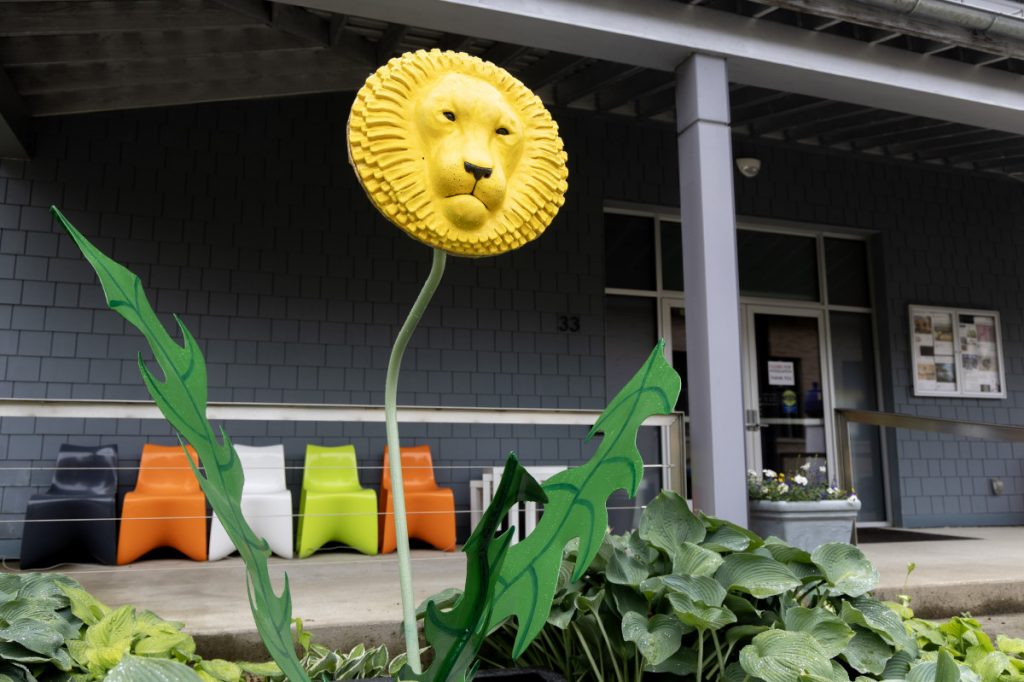
“Dandelion” by Paige Henry.
JENELL TAYLOR
Staff Writer
Through Aug. 26, Chautauquans can view a collection of outdoor installation works created by experienced metal sculptors Paige Henry and Ed Parrish in the Melvin Johnson Sculpture Garden of Strohl Art Center.
The exhibition, curated by Susan and John Turben Director of CVA Galleries Judy Barie, highlights outdoor works that are evocative of the natural world and speak to post-consumer culture.
Henry and Parrish are members of the Rivers of Steel Heritage Corporation team, a Pittsburgh-based nonprofit organization that showcases the artistry, workmanship and history of the steel industry via tours, workshops, exhibitions and festivals.
At Rivers of Steel, Henry began as a contractor doing structural welding repairs. Now, she serves as metal arts technician, where she maintains foundry and blacksmithing equipment and assists artists in safely executing their own projects.
“The work I have done in the industry has certainly helped inform the craftsmanship of my work,” she said.
Henry said a college foundry class is where she first fell in love with cast iron. Post-graduation, she worked as the foundry technician for the National Casting Center at Alfred University in Alfred, New York, and spent several years traveling to iron pours.
In the foundry industry, an iron pour is a live workshop in which professionals guide participants through the process of melting scrap metal into custom molds to create cast-iron sculptures.
“Iron pours have a lot of community and opportunities after academia for young artists and sculptors,” she said.
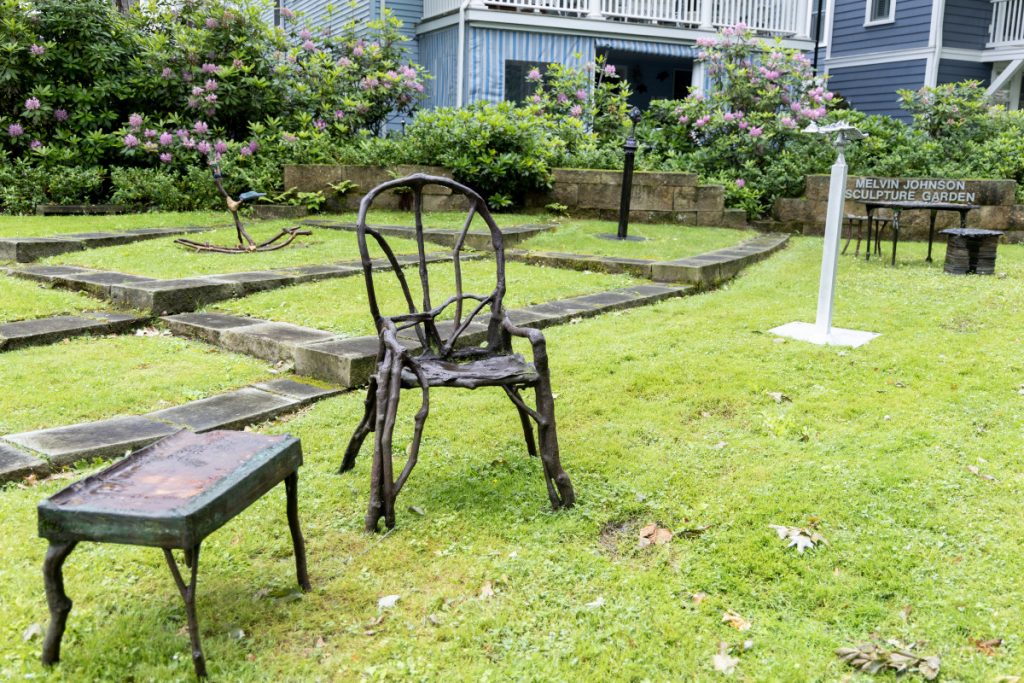
Henry’s work in the Sculpture Garden is a dandelion sculpture and her cast-iron “Stick Furniture” series, which she explained allows her to “work through complex mold challenges by creating furniture from nature.”
Her piece “Dandelion” combines cast iron and steel to create a lion’s head fixed on a stem in place of flower petals. She said she used forging and fabrication to give the sculpture its “playful scale and presence.”
“‘Dandelion’ was a way for me to sculpt with clay again to make the face casting,” she said.
Her process for “Stick Furniture” began with envisioning a chair or table in her mind, sifting through her collection of bark, rocks and sticks, and sometimes hiking with the intention of seeking a particular shape in nature.
“As I started making this body of work, I was immortalizing nature through an industrial material,” she said in reference to a 2014 Rivers of Steel project called “Iron Garden.”
Henry said the premise of the project — and theme of her series — focused on the idea that nature will survive and thrive once industry shuts down.
“Once my materials are gathered, I cut them to size, screw and tether them together until I find the form I want to cast in iron,” Henry said. She then removes the sticks and other materials after the resin-bonded sand mold captures the pattern.
Then comes the iron casting campaign, which involves “a lot of people, planning and sweat,” she said. “The morning after a safe and successful iron pour, the molds are open, and the real work begins.”
Henry recalled a time when her professor, Coral Lambert — a previous exhibiting artist in the Sculpture Garden — asked her why she makes chairs if she never sits down. She said one aspect of her work conveys a longing for something she doesn’t often get the chance to indulge in: rest.
“I used to live in the White Mountains, surrounded by nature,” she said. “I might just want to go camping.”
Henry encourages viewers to touch and feel her sculptures — perhaps even to sit on them if they please.
“There is a sense of human in the forms, and the tactile qualities are really exciting,” she said.
Accompanying Henry’s furniture conversations, Parrish’s work seeks to explore humanity’s place in the natural world through personifying “the discarded elements of our consumption,” he said.
Like Henry, Parrish discovered his interest in foundry while enrolled in college at East Carolina University, and after moving to Pittsburgh, he was “finally able to set up [his] own shop,” he said.
His continued exploration of metal work through blacksmithing, fabrication and foundry was “mostly self-funded and involved a lot of trial and error,” he explained.

Parrish said his “[do-it-yourself] artistic approach” led him to his role at Rivers of Steel, where he leads all foundry activities and workshops as furnace master and coordinator for the Metal Arts Program.
The organization provided him with a “historically important space” to continue his exploration in the metal arts, he said. Working at the grassroots level, Rivers Of Steel supports economic revitalization through developing thoughtful interactive experiences and fostering community knowledge of the industry’s heritage.
In particular, Parrish noted the retired Carrie Blast Furnaces — which now stand as a national historic landmark at Rivers of Steel — as memorializing the industry and paying homage to the workers who helped build Pittsburgh’s foundation.
“The Carrie Furnace is a daily inspiration to explore possibilities of metal,” he said. “It comes with opportunities for industry connections and funding that aren’t as easily accessible for an individual artist.”
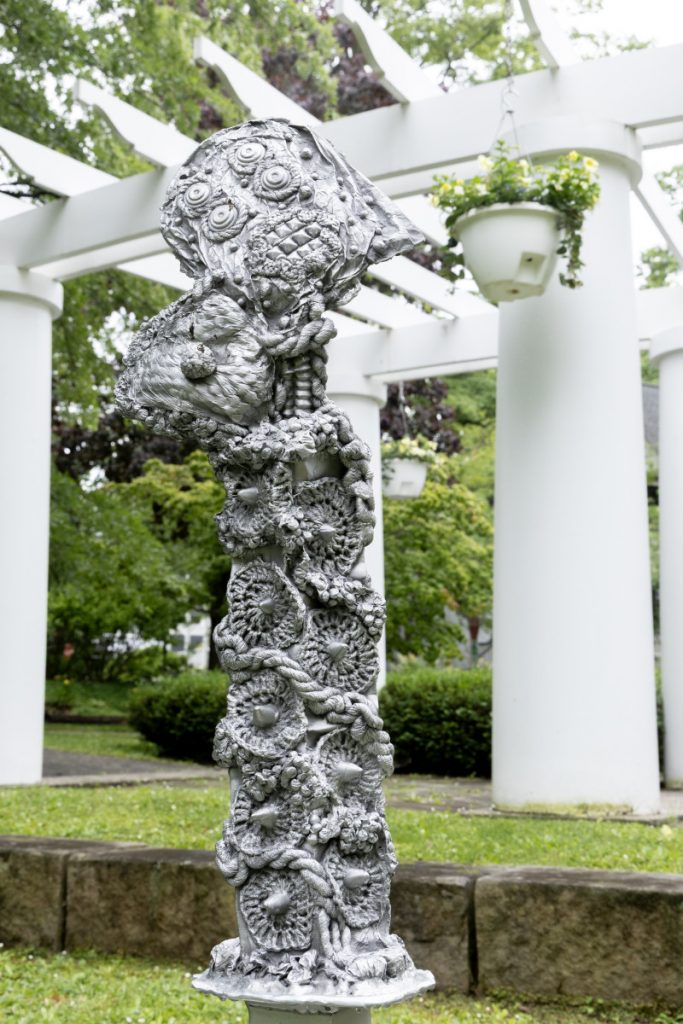
Using his learned skills in fabrication — the creation of metal structures via cutting, assembling and bending processes — Parrish sculpted cast iron and aluminum works that gesture toward the relationship between nature and human consumption.
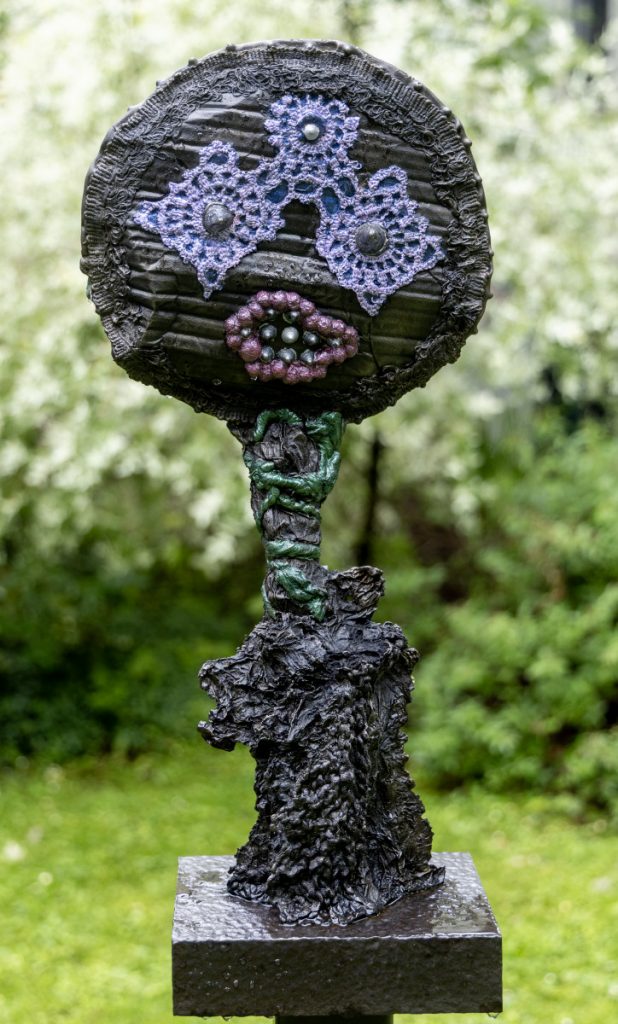
Described as “daydreaming in three dimensions,” Parrish’s addition to the Sculpture Garden is a series of sculptures made from “readily available, everyday common leftovers,” he said. Leftovers like wrappers and plastic were encased in metal using his casting process to reveal a unique pattern that serves as a “navigation of time and space,” he said.
Through the use of discarded material, Parrish cherishes the fleeting moments in time that were once mere afterthoughts.
“Each one informs the next,” he explained. By recycling parts and revisiting the pieces as he works, Parrish said he’s “stumbling and dancing forward” through his artistic navigation.
With more than 25 years of experience in metal work, Parrish said he’s only grown more proud of what he’s accomplished, and hopes viewers attend the exhibition with “an open heart and mind.”
“Find yourself in time and space — experience form,” Parrish said. “Be in the moment.”