LILY RESLINK
Staff Writer
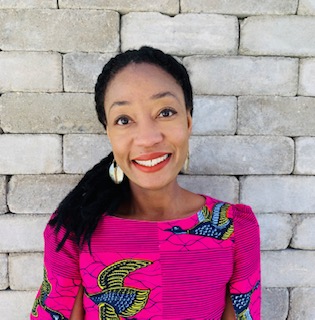
Self-described as “not a religion scholar, per se,” Naaborle Sackeyfio, associate professor of Global and Intercultural Studies at Miami University, draws from her own pluralistic upbringing in West Africa as a primary source for her interfaith insight.
Sackeyfio will deliver a lecture at 2 p.m. today in the Hall of Philosophy to explore how shared spiritual worldviews inform responses to human struggle within the contemporary context of what she called a “crumbling liberal order.”
She said she will bring her perspective from an upbringing exposed to diverse religious and spiritual traditions in northern Nigeria, which she noted is West Africa’s most populous country.
According to Sackeyfio, many spiritual traditions speak to the sacredness of all humans and share themes of interconnectedness, community building and the dignity of others. In her lecture, she said she will explore how these views influence the navigation of policy on human rights, migration and climate change.
Sackeyfio said her Interfaith Lecture will pose the question: “Especially in really fraught political times, where political discourse is frayed so much, how do we remember who we are?”
In exploring how spirituality can answer this question, Sackeyfio will reference contemporary examples. She said she will also share reflections on Nobel Prize laureate Leymah Gbowee, whom she said helped bring justice to Liberia alongside other female activists.
“There’s so much that I think spiritual traditions can offer in terms of helping us to remember our center and that there’s something connected that helps us to think of ourselves as a, broadly speaking, human family.”
Sackeyfio said she grew up learning about humility, kindness and helping others “in a very open-minded and curious household” in West Africa.
“It’s such a vibrant space for religion,” Sackeyfio said. “It didn’t matter that you were this faith tradition or that one. We’re human.”
Sackeyfio said she does not belong to a particular faith tradition.
She said she left West Africa in the early 1990s due to the impact of political decisions, growing religious tensions and reoriented economic policies. Acknowledging religious tension, she said what sticks most in her mind is the peaceful coexistence of her Christian and Muslim neighbors.
She said she witnessed harmonious relationships from a young age. “I think that also informs my own respect for the power that these kinds of connections can do,” she said.
In Sackeyfio’s perspective, spirituality gives people the flexibility and space to explore their interconnectedness. “It’s understanding that you are a ripple, and you have this incredible wattage,” she said.
In line with Week Seven’s theme of “Religion, Power and the Moral Stakes of a Changing Global Order,” she said an implicit question of her lecture is where morals center in this discussion.
“Inherent in all of the world’s wisdom, spiritual traditions, as I understand it, is this intrinsic celebration of the human in relation to … something larger than ourselves,” she said.
She said this spiritual exploration helps humankind find their individual and relational roles in this life.
Sackeyfio spoke on the potential of uniting spiritual beliefs, saying, “they’re not about universalizing.” Instead, she said spiritual tradition is about celebrating the different frameworks and practices that guide people to their respective innermost beliefs.
“There’s a breakdown of remembering the human dignity of other folks, and even how we relate to what nature is — something out there, something just for the taking — not realizing that nature is part of us,” she explained.
Drawing from her experience as an energy scholar, mindfulness practitioner and science communicator, Sackeyfio said she hopes to offer tools for practicing mindfulness and seeking understanding of others within her message of spiritual connection.
As a professor, Sackeyfio teaches courses on global and intercultural studies, international studies and African governance and development. Amid the world’s disarray, she shared her response to when international studies students are seeking direction.
“There’s this tendency to think, ‘I’m so small. What can I actually possibly do?’ and I think that’s certainly where a spiritual tradition has so much more potential, especially now when people are feeling disconnected.”
Sackeyfio emphasized the importance of practicing mindfulness. She explained how it gives people perspective on what is within their control, and how that is important because understanding what is within one’s power is a guide to areas where, in this world, it is possible to make a difference.
“You start with yourself,” she said. “And I think that’s what the spiritual traditions offer, but in community.”