
ARIANNA NEVAREZ
Staff Writer
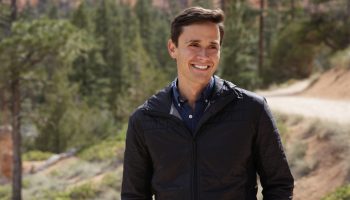
During a week structured around “Global Power and Our Evolving International Order,” Karim Sadjadpour said global power has dramatically evolved from the U.S. being the sole global power to the emergence of other countries starting to take power, leading to a diffusion of power.
He also said in this evolution, positive trends such as democracy have reversed in many countries around the world in this “new era of strongman.”
“History is not linear. It’s not like you’re constantly ascending a mountain. There can be moments, maybe even decades, where you fall behind, but I do think that as the child of immigrants to the United States, I still am a believer in American exceptionalism and in America being able to play a very constructive role in the world, and America being for many people a symbol of freedom and democracy,” Sadjadpour said. “… The more challenges we face at home, and the more polarized we are at home, it obviously inhibits our ability to advance our interests and be a positive example abroad.”
Amna Nawaz will host a conversation between Nazanin Boniadi and Sadjadpour at 10:45 a.m. Tuesday in the Amphitheater.
Emmy award-winning journalist Nawaz currently serves as co-anchor and co-managing editor of “PBS News Hour.” From reporting on politics and foreign affairs to culture, Nawaz has interviewed presidents, lawmakers, professional athletes and musicians.
Her father was a journalist in Pakistan, which influenced her in childhood to look at the world with a heightened sense of curiosity, according to an interview with KPBS. Though he was a journalist, she found her love for the career path on her own and realized the power of words as a tool, she said in the interview.
“One of the biggest challenges we have as journalists is to find a way to build bridges between people: the story that we’re covering and the people that we’re communicating to,” Nawaz said in a 2025 interview with The Chautauquan Daily. “… A lot of people think things are beyond their control or things are happening to them or around them, and this is one of those moments in history where people acting in the smallest of ways in their own communities — to protect their local newspaper, to protect their local member station, to show up and make sure their voice is heard — all of that matters and all of it makes a difference.”
Both Sadjadpour & Boniadi have Iranian roots, and Nawaz will engage them on their lives and respective areas of work. She will also talk to them about their perspectives on the state of Iran, the Iranian people and what could come next for the country.
Boniadi is a SAG and AACTA Award-nominated actress, producer and human rights advocate. Her parents fled Iran in 1979 when she was just 20 days old, and she has grown into someone who builds bridges between art and activism, according to an interview with The Hollywood Reporter. For the past two decades, The Hollywood Reporter said, Boniadi has connected with Iranian civil society while pressing Western governments to confront what she describes as crimes against humanity carried out with impunity.
When asked about the current state of Iran in January of this year, Boniadi said she was “reeling with anguish” but “a sense of resolve” in the interview. She told The Hollywood Reporter that nothing in Iran’s recent history compares to this moment that will define Iran’s future and test the world.
“Iranians live under a system that has stripped them of dignity and dreams. Iran has the highest per-capita execution rate in the world, ranks among the least free countries for journalists, and among the worst globally for gender equality,” Boniadi said in the interview. “Imagine the desperation and courage required to take to the streets knowing you may get killed. One young protester told his parents, ‘If I don’t go, nothing will change.’”
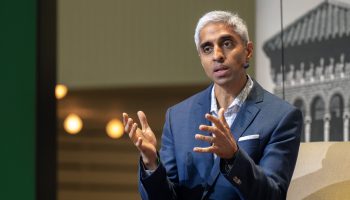
As a Carnegie Endowment for International Peace senior fellow, Sadjadpour focuses on Iran and U.S. foreign policy toward the Middle East. He is also a contributing writer for The Atlantic, a CNN Global Affairs analyst and an adjunct professor at Georgetown University’s School of Foreign Service.
Sadjadpour has firsthand witness of the Iranian regime while also living in Washington through numerous administrations, both Republican and Democratic, who have “all struggled to understand Iran, the nature of its regime and an effective U.S. policy response.” He said these experiences will lead to a unique perspective in the conversation with Nawaz and Boniadi.
“Both Amna and Nazalim are two of the most thoughtful voices on international affairs, in particular through the vantage point of the human angle and how it impacts ordinary human beings, so I think Chautauquans will really appreciate their thoughtfulness and empathy and hopefully have a better understanding of the war with Iran,” Sadjadpour said. “We’re in a historic anomaly right now; America and Iran are these fierce adversaries fighting (in a) war, but in reality, they are two countries who should be allies, not adversaries.”