CODY ENGLANDER
Staff Writer
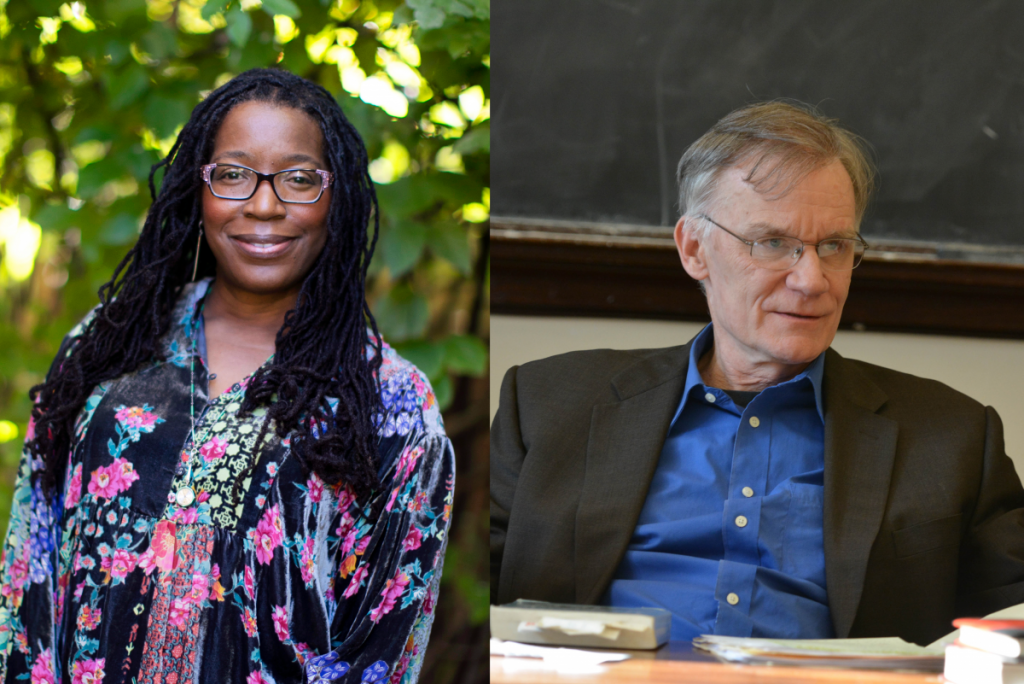
Ahead of her conversation with historian David Blight, Tiya Miles, historian and author, discussed Blight as an inspiration and explained the heart of their forthcoming conversation as part of the Chautauqua Lecture Series.
“David Blight’s work has been an inspiration for decades, especially his insights into history and national/regional memory and his contributions to public history as a scholar and an institution builder,” Miles said. “…I would say that division and disorientation are two modes that have defined the country over the past year. I hope my dialogue with David will help shed light on how both those modes have occurred in the past and thereby offer hope for the future.”
At 10:45 a.m. today in the Amphitheater, David W. Blight and Tiya Miles will engage in a conversation about the moral foundations of the Declaration of Independence and the Constitution and how interpretations of these documents have changed throughout American history.
As the Sterling Professor of History and Black Studies and Director of the Gilder Lehrman Center for the Study of Slavery, Resistance, and Abolition at Yale University, Blight is the author of many books, including Yale and Slavery, a narrative study of Yale’s historic involvement and associations with slavery and its aftermath, published by Yale University Press in 2024.
As the Michael Garvey Professor of History and Radcliffe Alumnae Professor at the Radcliffe Institute for Advanced Study at Harvard University, Miles is the author of eight books exploring Black, Indigenous and women’s history; place and environment; and contemporary uses of the past. Her novel, All That She Carried: The Journey of Ashley’s Sack, a Black Family Keepsake, won eleven historical literacy prizes and was a New York Times bestseller.
Ahead of their discussion, Miles reflected on the changes U.S. culture may see in its future.
“…I think we can glimpse around the bend that [artificial intelligence], climate change and political destabilization and reorientation, as well as people’s and nation’s reactions to these forces, will be primary drivers of change,” Miles said.
These changes may further redefine how the U.S. understands the Declaration of Independence and Constitution, as certain sections can fade in and out of relevance depending on the state of the country and its leaders.
“In Section 3 is that section that was almost all forgotten until recent times because of President Trump,” David Blight said in a June 2026 interview with The Atlantic. “It’s the one that says no one who had taken an oath of office to the federal government, the United States, and then engaged in insurrection or anything like insurrection could never again hold office in the federal government. That [section] was lost to history almost until just a couple of years ago.”
Miles said she hopes the audience is able to open their ears and hearts to their discussion about the great American documents.
“I don’t expect the conversation to be unusually difficult even as we know that U.S. history is replete with uncomfortable, unsettling and even unconscionable aspects,” Miles said. “I hope we will all be present to share, listen and learn in a spirit of openness, which makes hard topics easier to broach and bear.”