JENNA OUTCALT
Staff Writer
When it comes to climate change, Michael Hoffmann likes to communicate using something everyone understands: pizza.
“Everything in the pizza is changing, and then you can add so many ingredients to a pizza that the stories just keep piling on,” Hoffmann said.
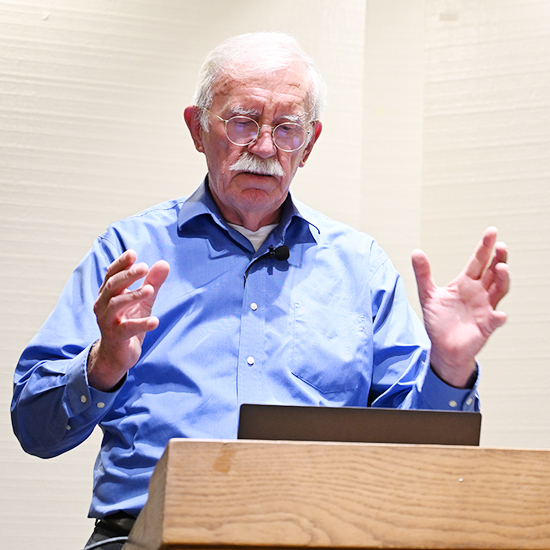
Hoffmann will speak about food as a messenger for climate change at 12:30 p.m. today for the Bird, Tree & Garden Club and Chautauqua Climate Change Initiative. According to Hoffmann, “everything on the menu” is changing with the climate.
“I use the term changing rather than [saying] it’s coming to an end,” Hoffmann said. “That’s not the case.”
In some cases, nutritional value is declining, and in other cases, things like antioxidants are increasing, according to Hoffmann. However, climate change is affecting every stage of production and consumption.
“It’s not just food,” Hoffmann said. “It’s also cosmetics, pet food, clothing. This is just to broaden the story about how everything around us is changing.”
However, Hoffmann said that talking about food is a powerful way to help people conceptualize the changes.
“We don’t talk enough about climate change, but we talk about food,” Hoffmann said. “So, can we improve the number of us talking about climate change through food? Talking about climate change is one of the most important things we can do.”
Hoffmann said “it’s not controversial” to talk about food compared to more politicized issues because of its relevance to any audience.
“We all eat,” he said. “… Everybody, regardless of who you are, where you are, what you do, what you believe, you eat.”
Hoffmann said his lecture will be aimed at “the rich world.”
“There’s a lot of people around the world who already are undernourished and all kinds of things, and that will get worse,” he said, “but for those of us in the rich world, we have the capacity to make a difference and to wake more of us up to the fact that climate change is serious.”
Hoffmann also emphasized that food is an issue that connects people across the globe and shows international interdependence.
“Peru has expanded blueberry production to now 50,000 acres, and they’ve been able to do that because the ice in the mountains is melting much faster, giving them more irrigation water to expand agriculture,” Hoffmann explained. “But that ice will be gone in 15 to 20 years. Then what?”
Hoffmann, a professor emeritus at Cornell University, said he likes to ask students what food means to them. The answers are often very personal, centering around joy, culture and connection, according to Hoffmann.
“Food is personal, and that’s exactly what we need to help people connect with climate change,” he said. “It’s relevant.”
He also said people often ask him how they can contribute as individuals.
“One of the things is [reducing] food waste and another is reducing red meat consumption,” he suggested. “I just say, when it comes to red meat, treat it as a delicacy, not a staple.”
However, Hoffmann emphasized conversation and awareness as some of the most important tools.
“Peer pressure is really a powerful mechanism,” he said. “If you tell somebody else you’re doing the following, they are probably going to do the same thing. And then others are in the fight.”
Hoffmann said he wanted Chautauquans to walk away from the lecture feeling like they could apply the lessons they learned.
“If we can keep our favorite foods on the table, we might just keep the planet livable,” he said.