Archive | Morning Lecture RSS feed for this section

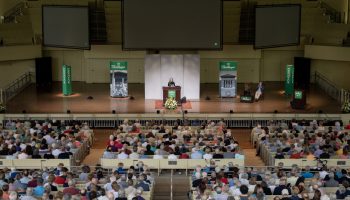
2013 Week Nine looks into the future of unsustainable health care crisis

By this time next summer, if the Affordable Care Act proceeds as planned, big changes will be in effect.

Standardized billing and electronic records will become mandatory; increased funding will be provided to the Children’s Health Insurance Program and state Medicare programs that offer preventative health services; hospital performance statistics and evaluations will be publicly reported; and a tax hike of 0.9 percent on those earning more than $200,000 annually will be earmarked for health care costs.

That is if everything goes according to plan, which may be unlikely. A presidential election, along with other political movements in favor of and against the act, will likely modify, transform, or even render irrelevant that timeline.

Read more
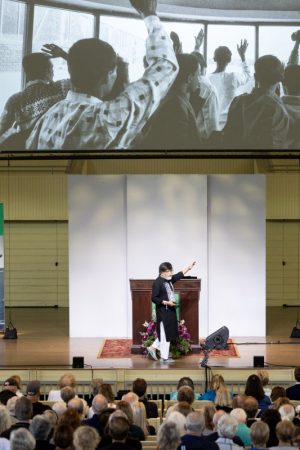
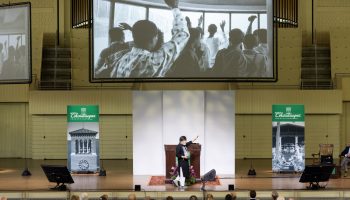
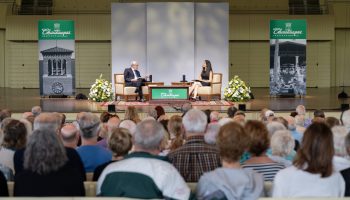
Nancy Gibbs and Michael Duffy, co-authors of The Presidents Club and editors at Time magazine, bring the season to an end with a conversation on the upcoming presidential election. Photo by Lauren Rock.

Gibbs, Duffy close 2012 morning lecture series with look ahead to election

The final morning lecture of the 2012 Season offered Chautauquans a preview of the upcoming presidential election from two veteran journalists.

Nancy Gibbs and Michael Duffy, editors at Time magazine, inspired the Week Nine morning lecture theme of “The Presidents Club,” with their book of the same name.

The Time editors’ casual discussion covered everything from Mitt Romney’s wealth to the relationship between Bill Clinton and President Barack Obama.

Read more
Gibbs and Duffy

Gibbs, Duffy assume ‘Time’ roles to forecast 2012 political climate

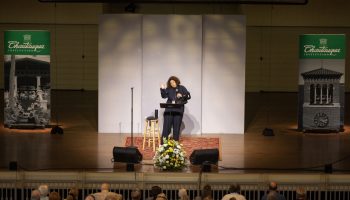
Nancy Gibbs and Michael Duffy, co-authors of The Presidents Club and editors at Time, present the final morning lecture of the 2012 Season at 10:45 a.m. today in the Amphitheater.

As editors at one of the most notable weekly news magazines in the U.S., Duffy and Gibbs will lend their expertise on the upcoming political season for the Chautauqua audience.

The duo has worked together for 25 years, and Duffy has covered eight presidential campaigns.

Read more
Presidential historian Richard Norton Smith speaks on the “exclusive trade union” between U.S. presidents at Thursday’s morning lecture in the Amphitheater. Photo by Lauren Rock.

Smith offers insight into post-term lives of presidents

In the waning days of his presidency, a 70-year-old Dwight D. Eisenhower fled Washington with his wife, Mamie, to their farm in Gettysburg. He was facing the impending reality of life after the Oval Office, a time marked by uncertainty.

Presidential historian Richard Norton Smith offered a peek behind the curtain at those private lives during Thursday’s morning lecture, titled “Hail and Farewell: An Exclusive Trade Union.” Smith’s talk was the penultimate lecture for Week Nine, themed “The Presidents Club.”

“Ike faced the conundrum of a retirement for which there was no retirement policy,” Smith said. “To guide him, Eisenhower had only his own instincts and the often dispiriting examples of those who had gone before.”

Read more
Lynda Johnson Robb, daughter of President Lyndon B. Johnson, and Susan Ford Bales, daughter of President Gerald Ford, speak Wednesday morning in the Amphitheater.

Bales, Robb discuss unique life of being commander-in-chief’s daughter

Most people can relate to a teenager’s difficulty dealing with homework, school dances and friends while growing up.

But only a few people understand what it’s like to deal with those things under the white-hot spotlight of being a presidential child.

Lynda Johnson Robb and Susan Ford Bales shared their stories with journalist John Avlon during Wednesday’s morning lecture in congruence with the Week Nine lecture theme, “The Presidents Club.”

Read more
Smith

Smith explores ‘exclusive trade union’ between early presidents

If you asked Richard Norton Smith what his job is, he probably wouldn’t tell you that he is a presidential historian. Despite rightfully earning his title from years of work as a biographer, head of six presidential libraries and a scholar-in-residence of history, Smith’s passion has always been his love of history, not fulfilling titles.

Smith will take the lecture platform at 10:45 a.m. Thursday to fill in gaps on the Week Nine theme, “The Presidents Club.” His lecture, titled “Hail and Farewell: An Exclusive Trade Union,” will cover relationships between America’s early presidents, before Nancy Gibbs and Michael Duffy’s book begins with World War II-era presidents.

Read more
Philip Nash, associate professor of history at Penn State University, delivers Tuesday’s Interfaith Lecture in the Hall of Philosophy. Photo by Lauren Rock.

Nash: As with A-bomb drop, presidential decisions full of moral gray areas

“The wooden structures were closely packed, quite numerous, you may be aware of housing in Japan, the interior walls made of paper so they burn very, very well. Temperatures in the city reached upwards of 1800 degrees Fahrenheit. Vehicle frames were melted; canals and ponds were brought to the boiling point. The air contained drops of liquid glass drifting in the wind. Citizens running for their lives spontaneously combusted; many were found charred beyond recognition or dead from heat or suffocation. Over a quarter of a million buildings were destroyed, 16 square miles, almost one-quarter of the city, were laid to complete waste — up to 100,000 people died in that raid,” said Philip Nash, an associate professor of history at Penn State University at the start of his Tuesday Interfaith Lecture.

Nash is the author of The Other Missiles of October: Eisenhower, Kennedy, and the Jupiters, 1957–1963.

“What I just described is the conventional bombing raid — B-29 bombers on the night March 9 to 10, 1945 — that was not a description of Hiroshima or Nagasaki,” he said.

Read more

Bales: Presidential history through a daughter’s lens

Living in the White House is magnificent, especially, as in my case, for a teenager. The opportunities to see and be a part of history are endless. I will always cherish that time and will always be grateful to the American people for the confidence they placed in Dad and our family during that turbulent time.

But there’s a difficult part of growing up in the White House that’s usually overlooked: the effect of criticisms — often harsh and relentless — of our dads and moms. I suspect presidential children from Sasha and Malia Obama to Lynda and Luci Johnson to Alice Roosevelt Longworth would say they were affected — many times significantly — by political attacks on their presidential dads. I certainly felt those criticisms, which were leveled not just against Dad, but also against Mom. However, Americans have recently experienced a re-examination of Dad’s presidency through the more dispassionate historical lens and that, in turn, has affected the impact of those earlier criticisms on me.

Read more