LILY RESLINK
Staff Writer
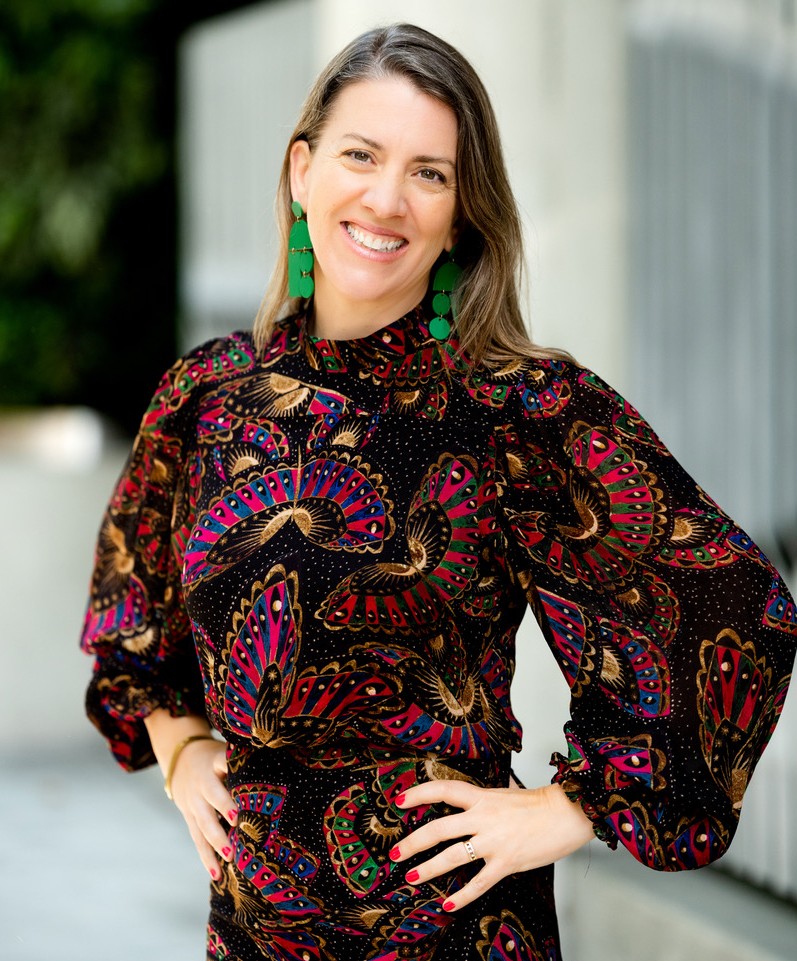
Anna Lappé, executive director of the Global Alliance for the Future of Food, will deliver a lecture at 10:45 a.m. in the Amphitheater advocating for sustainability and justice in food systems.
Long before gaining her current prominence, Lappé is credited with preemptively coining the term “Vote With Your Dollar” in a 2003 article in which she wrote, “Every time you spend money, you’re casting a vote for the kind of world you want to live in, including the food you buy.”
The world that Lappé wants to see, according to a Retro Report interview, is one where the food system is no longer “inefficient, unjust, illogical and destructive.”
“Becoming a food author and educator was kind of like going into the family business, she said in a 2016 interview with Foodstand.
Her mother, Frances Moore Lappé, wrote the 1971 book, Diet for a Small Planet.
In Lappé’s 2016 Foodstand interview, she explained how the chance to help her mom with a sequel to her book was a catalyst to pivoting from a career path in public education and economic development to a career of “promoting food justice, sustainable food systems and a world where everyone everywhere has access to life-support-
ing foods.”
Her book, Diet for a Hot Planet: The Climate Crisis at the End of Your Fork and What You Can Do About It, explains these seven principles for a climate friendly diet: reach for real food; put plants on your plate; don’t panic, go organic; lean toward local; cut out food waste; send packaging packing; and get back to the kitchen.
Although she focuses heavily on educating consumers, she said change at the corporate level presents some of the greatest challenges in her work.
In a 2025 interview for a series presented by the Global Food Institute at The George Washington University and the nonprofit organization Food Tank, she said, “My colleagues and I are going up against some of the most ruthless and deep-pocketed corporations out there.”
In a 2019 interview with Tanya Kerssen on Medium, Lappé said not addressing the food sector in the climate crisis would mean failing to protect climate stability. “I think we’re at such a point of crisis that we actually don’t have a choice but to work on multiple fronts.”
In the 2025 interview, she said food systems are overlooked in climate negotiations but contribute to about one-third of the emissions driving the climate crisis.
“I would argue, reducing those emissions, if we had the political will, is one of the lowest hanging fruit for action on climate with some of the greatest benefits. More climate-friendly food systems are better, not just for climate, but for health, biodiversity, animal welfare, community well-being and for fishers and farmers, too.”
Lappé’s work includes education on the correlation between food access and global conflict.
In the 2025 interview, she said, “We know that wherever people’s rights are not fulfilled, there is hunger. We know that where there is conflict, there is hunger, and that, despite the Geneva Conventions, denying access to food is still used as a weapon of war — as we’re seeing in Gaza today. We know that war and conflict are the single largest drivers of hunger worldwide.”
Alongside the extremes of conflict-induced famine, she said everyday food insecurity is also driving the crisis of hunger in the U.S. In the 2025 interview, Lappé said, “Despite being one of the wealthiest nations on the planet, tens of millions of … Americans go hungry and nearly 42 million, about one in eight households, rely on government food assistance.”
In the 2016 Foodstand interview, her answer to “What is your food inspiration?” was her two daughters. “I see how happy and healthy they are eating nutritious and sustainably grown food, and so I fight hard every day to ensure they can have access to food that nourishes them and so that our food system brings more of this kind of food to more kids.”
In an interview with Lappé posted to Foreign Policy Association, following the release of Diet for a Hot Planet, she spoke about how she co-founded the Small Planet Institute with her mother in 2001 to further the idea of a “living democracy.”
“The existence of hunger amidst plenty provides evidence of the lack of democracy,” is a core theme of work at the Small Planet Institute, Lappé said.
“I stand on the shoulders of so many incredible food leaders, including my own mother,” she said in the 2025 interview. “For decades now, she and many, many others around the world have been beating the drum that the ongoing scourge of hunger in the world — on a planet where more than enough calories are produced to feed every single person — is caused not by a productivity crisis, but a democracy crisis.”