Rocco Prioletti
Staff Writer
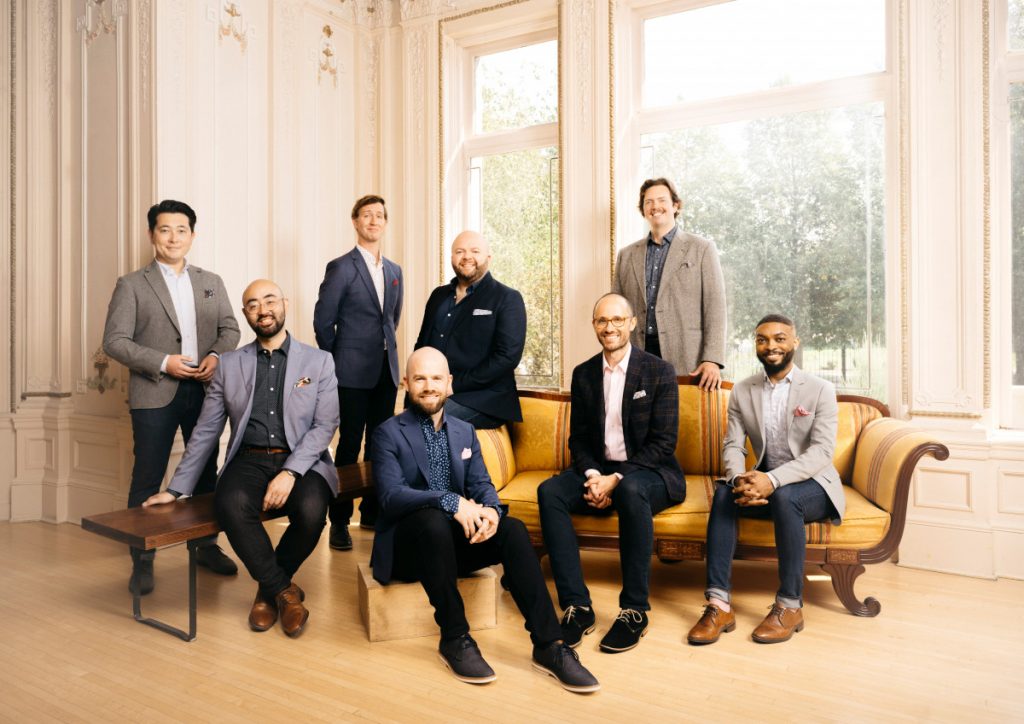
At first glance, when eight-member low-voice vocal ensemble Cantus opens the singing circle for audiences to engage in a program dedicated to sincere storytelling, “… it may seem like an immigration program, but really, it’s an American program,” performing tenor vocalist Paul John Rudoi said.
In addition to his role as a performing tenor vocalist, Rudoi is also the programming facilitator and a member of the ensemble’s artistic council for the group.
The ensemble’s program, titled “The Road Home,” celebrates 250 years of America by accentuating the importance of diverse voices. They will perform the music of contemporary American composers, all of whom are first- or second-generation American immigrants.
“The reality is, this is America,” Rudoi said. “… This is all music that has been written by Americans, for Americans,” Rudoi said. “They just happen to also be immigrants that have come from all over the world.”
“The Road Home” spotlights the cultural identities that remain inseparable from oneself, despite no longer standing on the land where such traditions were initially cultivated. Now, bringing these musical traditions to America, composers instill their individual history within the country’s air through song.
Shabnam Abedi’s arrangement, “Manush Dhoro, Manush Bhojo,” reflects upon the act of traveling itself.
“It’s a beautiful, beautiful piece that celebrates the coming and going that we experience as we go to and come away from a brand new location,” Rudoi said. “… It’s a reflection of boat culture: … this idea that boats are passing each other, and you may never see them again.”
Australian American composer Melissa Dunphy treads similar territory. Her commissioned series of pieces, one “crux” of the program, is based on erasure poems from the N-400 immigration form.
Dunphy’s songs detail the difficulties behind the extensive process. Rudoi highlighted the narrative behind the second movement.
“It’s a reflection of the actual form itself, and how it can be a bit inhumane the way that it’s communicating to the people who are applying to become citizens,” Rudoi said.
Though the program addresses a variety of experiences pertaining to immigration, what connects the pieces ultimately is their call for celebration — whether it manifests through songs of interior self-reflection or exuberant jubilation is up to the composer’s wishes.
“The vast majority of this repertoire is actually just upbeat and celebrating the library of culture that we have — and that’s a really great way to think about immigration, especially in this time,” Rudoi said. “And we were proud to just sing the music of these wonderful immigrant composers.”
Yosvany Estepe’s arrangement, “El Manisero,” which translates to “The Peanut Vendor,” stands out to Rudoi as being particularly “phenomenal and extremely fun.”
Cantus will perform at 4 p.m. today in Elizabeth S. Lenna Hall. Their narrative-based programs extend the voice beyond just the musical, doubling as an instrument to communicate and share universal human stories with concertgoers.
For Cantus, a song’s beauty is always supported by the underlying meaning beneath it. Whether it may be a classical work or a contemporary pop tune, the shared message is of the utmost importance.
“We might have a piece by Bach right next to a piece by Dave Matthews and if they have a common message, then they can be quite moving — even if you don’t know German, or you’ve never heard of (the) Dave Matthews Band,” Rudoi said.
Lacking a sole artistic director, Cantus is left to sing without a traditional conductor leading with a baton in hand; in doing so, the ensemble’s palms all remain outstretched, open for collective support and guidance among each other.
“We enjoy looking at each other and working through those moments together and seeing how well we can do things without anyone waving their hand — but, that speaks to something deeper,” Rudoi said.
What makes Cantus distinctive is their dedication to human connection.
“The uniqueness comes from eight men, regardless of where we come from, finding common ground in a level of vulnerability that, frankly, we don’t always have agency to have in society,” Rudoi said.