NORA SMITH
Staff Writer
Acts of dialogue and individual singing can only get a community so far, but when put together, they might just heal what’s been broken between people of different worlds, experiences and perspectives, according to Micah Hendler.
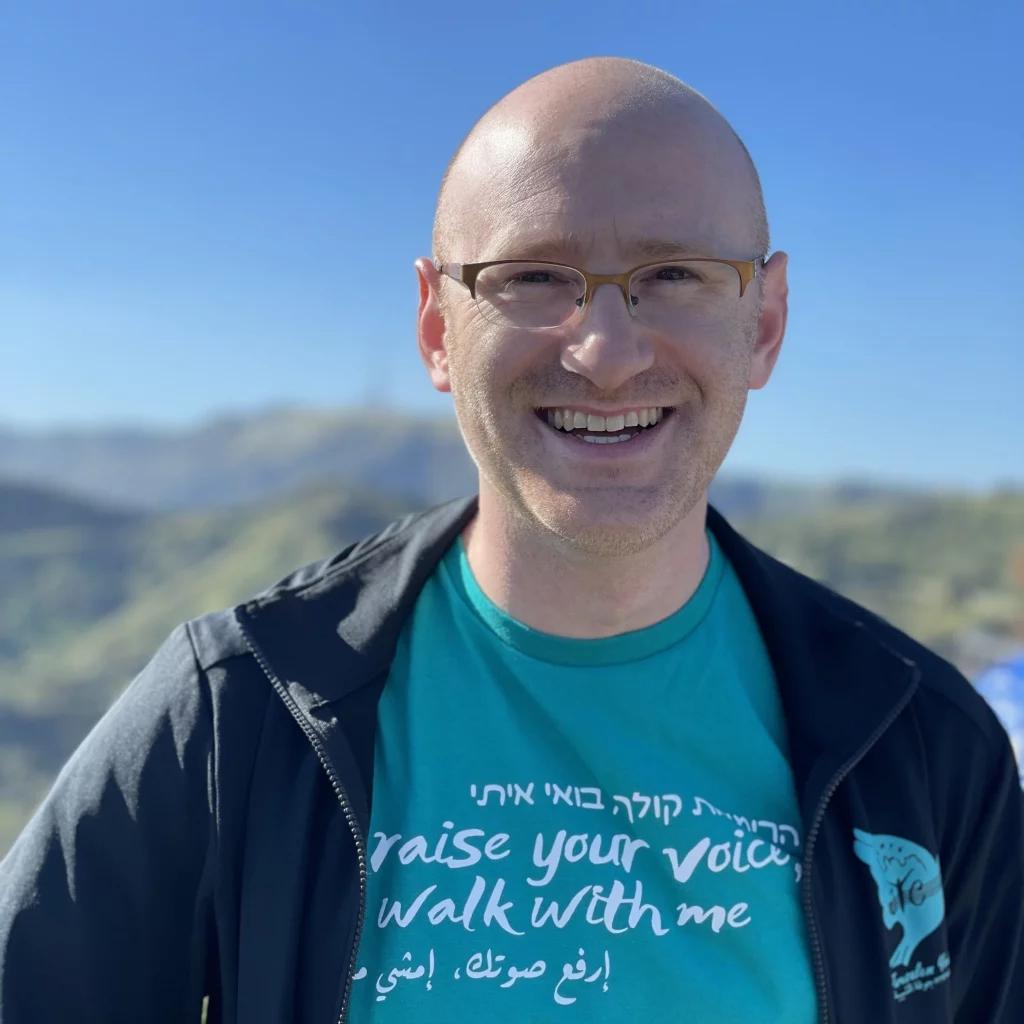
Hendler has experienced both communal singing and facilitated dialogue, so he merged the two as the founder and artistic director of the Jerusalem Youth Chorus, an Israeli-Palestinian music and dialogue project.
At 10:45 a.m. today in the Amphitheater, Hendler will give a lecture on what inspired him to establish JYC and the importance of music and dialogue not just individually, but together.
“People singing together are neurologically, biologically, evolutionarily hardwired to trust one another more,” Hendler said. “To feel like they are part of a whole, to feel like there’s a sense of connectedness, of relationship in the group just by virtue of singing together — within that context, it is much easier to have hard conversations.”
Hendler views music as both a warm-up and cooldown from dialogue in JYC, which is made up of people from drastically different world views and experiences. Simply, JYC exists as a space for people to be heard.
“It can be very hard to hear something that challenges a fundamental narrative that you grew up with or something about the world that you’ve always believed to be true,” Hendler said. He believes it’s best to move through this process surrounded by a community of trust and honesty, in a group where one also does something they enjoy, like singing.
“Dialogue is hard,” Hendler said. “Singing together feels really nice.”
Hendler said groups that consist only of practices of dialogue or singing without any dialogue are “leaving something on the table.”
He believes it’s best to move through this process surrounded by a community of trust and honesty, in a group where one also does something they enjoy, like singing.
“Dialogue is hard,” Hendler said. “Singing together feels really nice.”
Hendler said groups that consist only of practices of dialogue or singing without any dialogue are “leaving something on the table.”
When a group focuses on music and avoids speaking about the experiences of different group members, Hendler said it isn’t as effective as combining the two, nor is it sustainable. The same is true for groups that just focus on dialogue; it’s often hard to keep the members’ motivation up and there’s a lack of results.
“With the chorus, we also have a platform that allows us then to use the sort of culture and political power of music to try to change the conversation about what people can even imagine,” Hendler said.
Furthering this work, Hendler is currently writing Impossible Harmony, a book that tells the story of the JYC, which he said shows this form of conflict resolution is possible and calls it into action.
“It is possible for us to humanize each other, even across the deepest divides and in the most challenging and unjust circumstances, and … if we don’t do that, we’re screwed,” Hendler said. “It’s possible to do it, and we must do it, and if these kids in Jerusalem can do it, you can also do it, whoever you are.”
Hendler said his book and these concepts are important because of the many divides in the United States in particular right now, so it’s vital to build communities, practice dialogue and sing.
“I hope that people leave with a little bit more hope and a little bit more determination to give a chance to a particular, either relationship, or an opportunity or a challenging situation or an area in their own lives where they may be facing some pretty challenging differences in perspective and to feel … marginally more equipped and motivated to give that relationship or situation a chance to heal or to grow,” Hendler said.