JENNA OUTCALT
Staff Writer
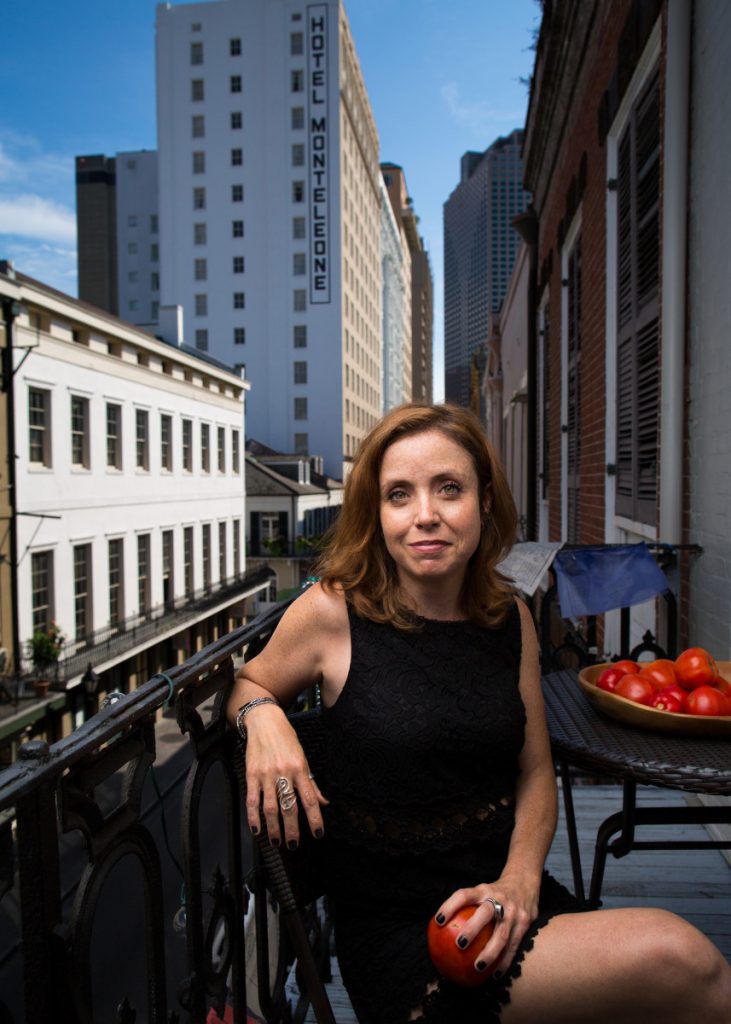
When Danielle Nierenberg was growing up in rural Missouri, she wasn’t a fan of farming, she admitted. In fact, to put it bluntly, she said she used to think farming was “stupid.” However, as she began to work with farming communities in the Peace Corps after college, her perspective shifted.
“It wasn’t this big ‘aha’ moment, but it was this slow realization that I was the stupid one, not farmers, and that they were contributing so much to not just food security, but to protecting the environment, helping their communities thrive,” Nierenberg said.
Now, Nierenberg is the cofounder and president of Food Tank, a nonprofit working to educate on and reimagine food and agriculture systems. She will lecture at 10:45 a.m. today in the Amphitheater on “the future of agriculture, food and technology.”
“I think I’m going to approach it in a different way than other folks who are involved in food and agriculture would likely do,” Nierenberg said.
According to Nierenberg, when people consider innovation, they often make the mistake of assuming it has to be a new technology.
“It’s more important, I think, that we look at relationships with farmers, with fishers and others in food and agriculture as foundational,” she said. “That’s the best kind of innovation: building those relationships, building trust, making sure that we’re investing in those folks and respecting them.”
Nierenberg said that inventions can come and go, but relationships are what create a strong foundation for food systems.
“I like thinking of relationships as architecture,” she said. “That’s how we build a better food and agriculture system. That’s how we create better, healthier, more nutritious food for eaters. That’s how we make sure that world communities are not just surviving, that they’re thriving.”
However, Nierenberg emphasized that it would take “mass incremental change” to improve food systems.
“Food and agriculture systems are exactly that: They’re systems,” she said. “No silver bullet is going to solve what we’re facing right now with high food prices, food nutrition and security, not just in the Global South, but here in the United States.”
According to Nierenberg, a transformation is happening with food systems, though it takes “a lot of puzzle pieces” falling into place to see the change.
“There are bright spots here in the United States and all over the world where farmers are getting those fair prices, where workers are respected, where communities are well fed with nutritious food. I think when all of those start coming together, it’s not a coincidence,” Nierenberg said.
Nierenberg explained that Food Tank works hard to be nonpartisan and focuses on “bringing as many people to the table as possible and creating those unusual and uncommon collaborations.”
“… Food and agriculture, the climate crisis — these shouldn’t be partisan issues,” Nierenberg said. “They should be things that everyone cares about.”
However, that is not the case right now, according to Nierenberg.
“Unfortunately, in our current political environment, food has become very politicized when we’re talking about things like SNAP benefits or benefits to the Women, Infants, and Children program,” she said. “Poor people are being blamed for being poor and hungry right now, and I think that’s a detriment to us all.”
Through domestic and international turmoil, Nierenberg said Food Tank’s goal is to “amplify the work that farmers are doing.”
“These are very uncertain political and geopolitical times, and farming communities around the world and here in the United States are suffering because of high input prices and lots of other things,” she said, “so bringing awareness to these issues is the mission behind what we do.”
Nierenberg said she wants people to get closer to their food system and get out of their comfort zone, whether that means trying a new kind of restaurant or shopping at the farmer’s market.
“Not everyone has the ability to have a garden or even grow something on their fire escape,” Nierenberg said. “But asking questions about where your food comes from, who grows it, I think it brings people closer to their food system.”
Nierenberg said it brings her joy to be a part of something that matters. She said Food Tank’s priority is sharing stories and “focusing on farmers being able to tell their own stories of their love of the land, the love of their communities, the love of their animals, the love of the work that they do.”
Nierenberg said awareness is the first step towards change when it comes to food and farming.
“Our mission is to tell these stories of hope and success so others can be inspired,” Nierenberg said.