JENELL TAYLOR
Staff Writer
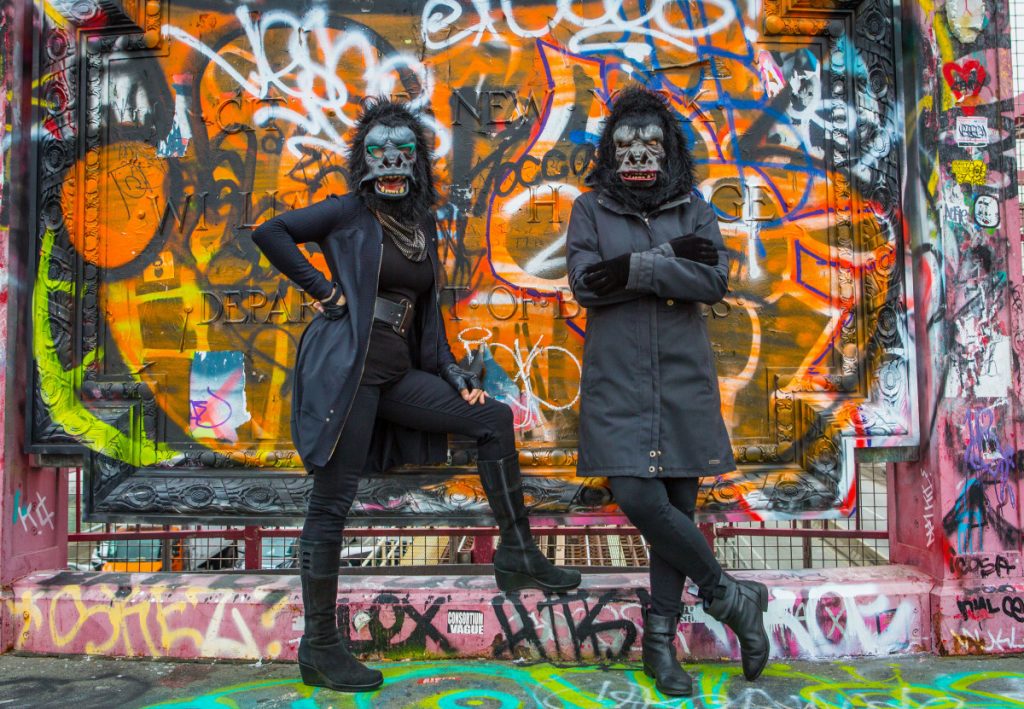
As time persists, the presence of diverse voices in the art world has only grown in abundance. However, for “Frida Kahlo,” the founding member of the anonymous feminist group of artists known as Guerrilla Girls, there is still ample work to be done.
At 6:30 p.m. today in Smith Wilkes Hall, Kahlo will speak to Chautauquans about the importance of women in the arts in conjunction with the Week One Chautauqua Lecture Series theme, “Icons and Instigators: Women Who Change the World.”
“We started asking questions and realized that there were a lot of implicit and explicit biases that were filtered into the art world,” Kahlo said. “And if you really want to tell the history of a culture, you have to include all the voices of that culture and its history. Otherwise, it’s not the history of the culture.”
Formed in New York City in 1985, the Guerrilla Girls have dedicated themselves to revealing gender and ethnic-based discrimination in the media. Taking note of the pervasive way women’s intersectional perspectives were factored out of film, art, pop culture and politics, the artists sought to expose it and invent new ways of amplifying female voices.
As struggling artists attempting to navigate the exclusivity within the city’s creative spaces, they had to think innovatively if they wanted the world to hear them.
“Because we started out on the streets, no one wanted to listen to us inside galleries and museums,” Kahlo said. “So we started putting up posters on the street to get people’s attention.”
As part of their work, the collective travels the world using posters, books, video content, lectures, interviews, exhibitions and interventions to highlight their history and cause. These come together to “tell people things they might not already realize,” she said. Their most recent book, Guerrilla Girls: The Art of Behaving Badly, contains the impact of their projects in the fight for inclusivity.
The group uses pseudonyms of prolific historical women to honor their legacies and keep their accomplishments circulating in the public eye. They also chose to emerge as anonymous for two other reasons: to secure their safety as artists and to keep society’s attention dialed in on the message, not the messengers.
“You know, in a small art world, if you complain, that’s kind of the end of your career — at least in those days,” Kahlo said. “It was also a really great way to depersonalize the issue and to talk about the condition,” she continued. “If our identities had been out there from the very beginning, then our criticism would have been seen in terms of what we personally did or did not have.”
Kahlo anticipates that her speech will inform Chautauquans about the group’s endeavors and encourage marginalized women and artists of color to use their voices. She also hopes that listeners will reflect on the Guerrilla Girls’ motto:
“Do one thing. If it works, do another. If it doesn’t, do another anyway. Keep chipping away.”